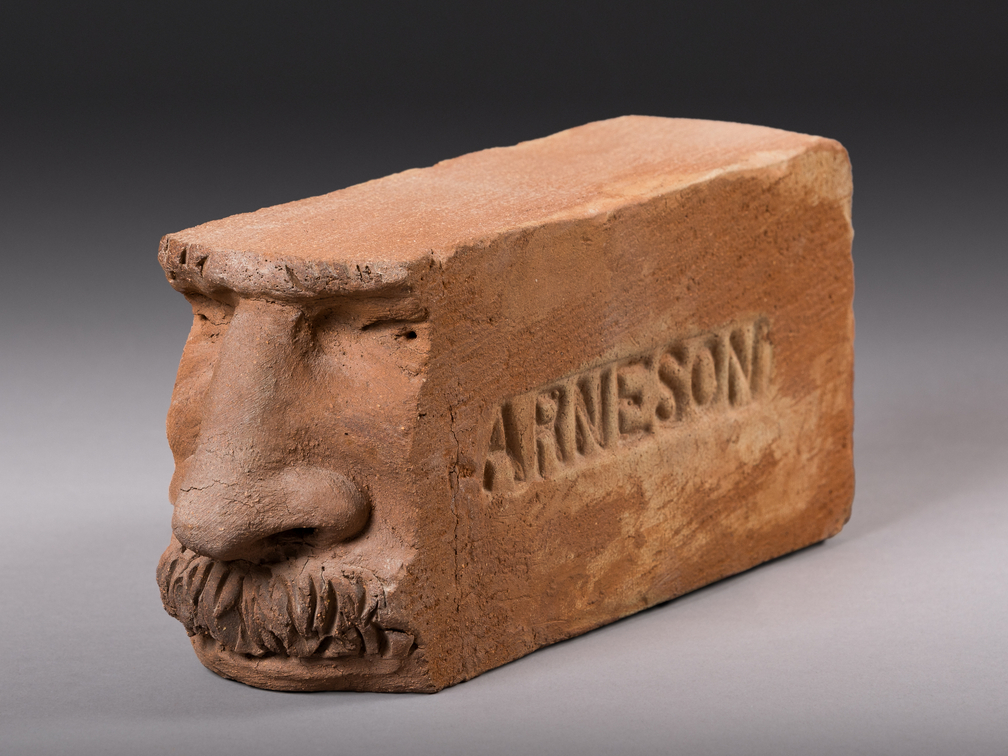
Robert Arneson

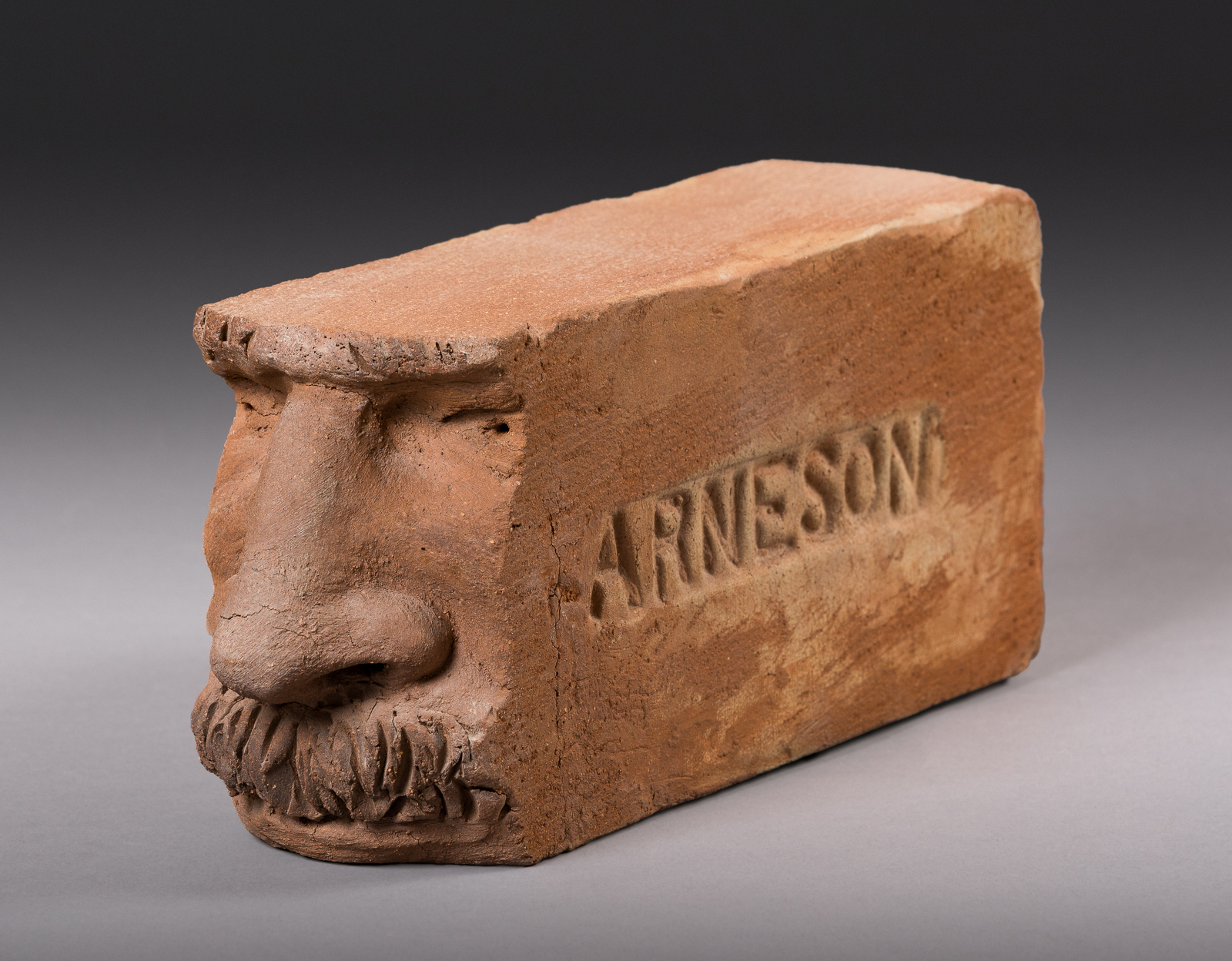
Robert Arneson
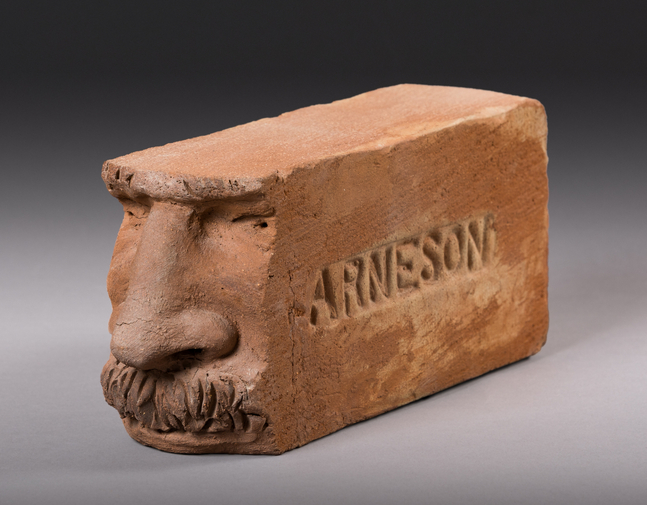
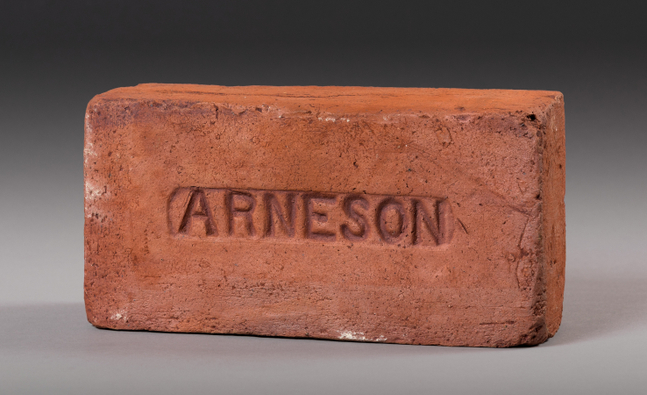
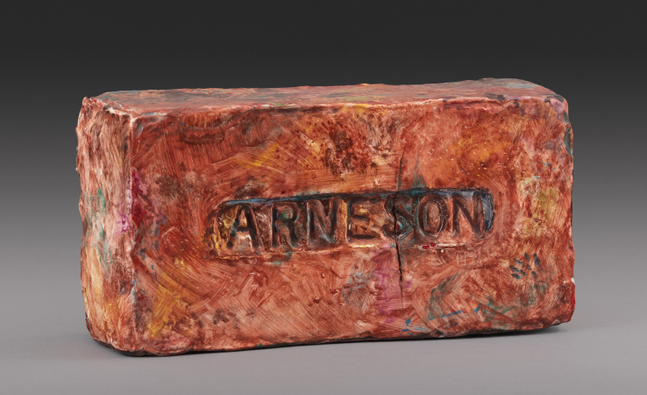
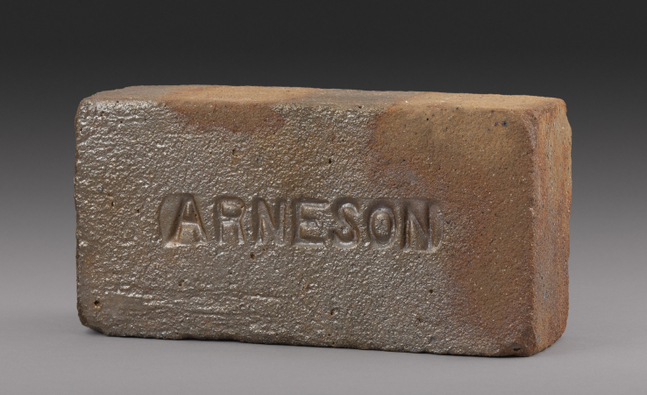
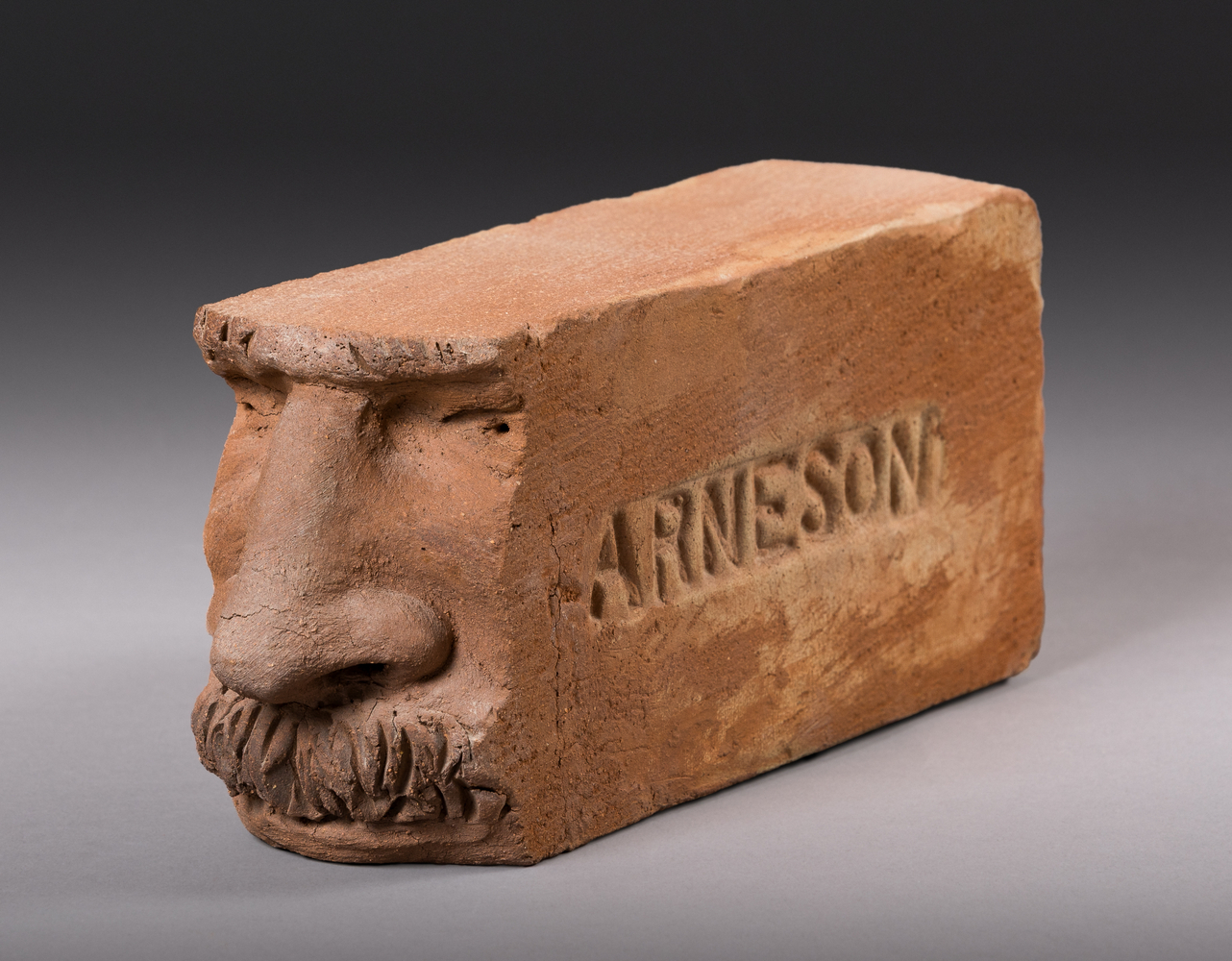
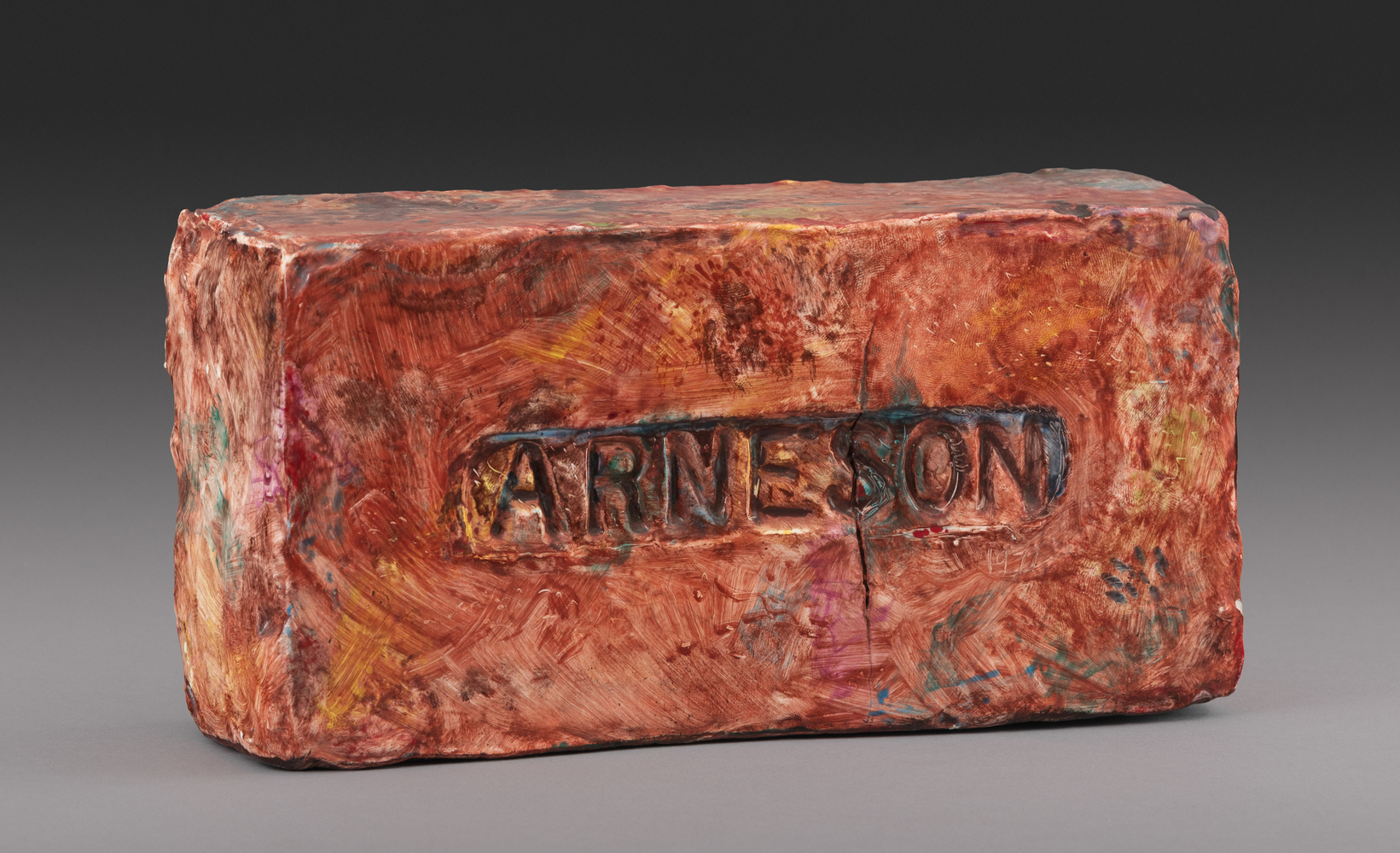
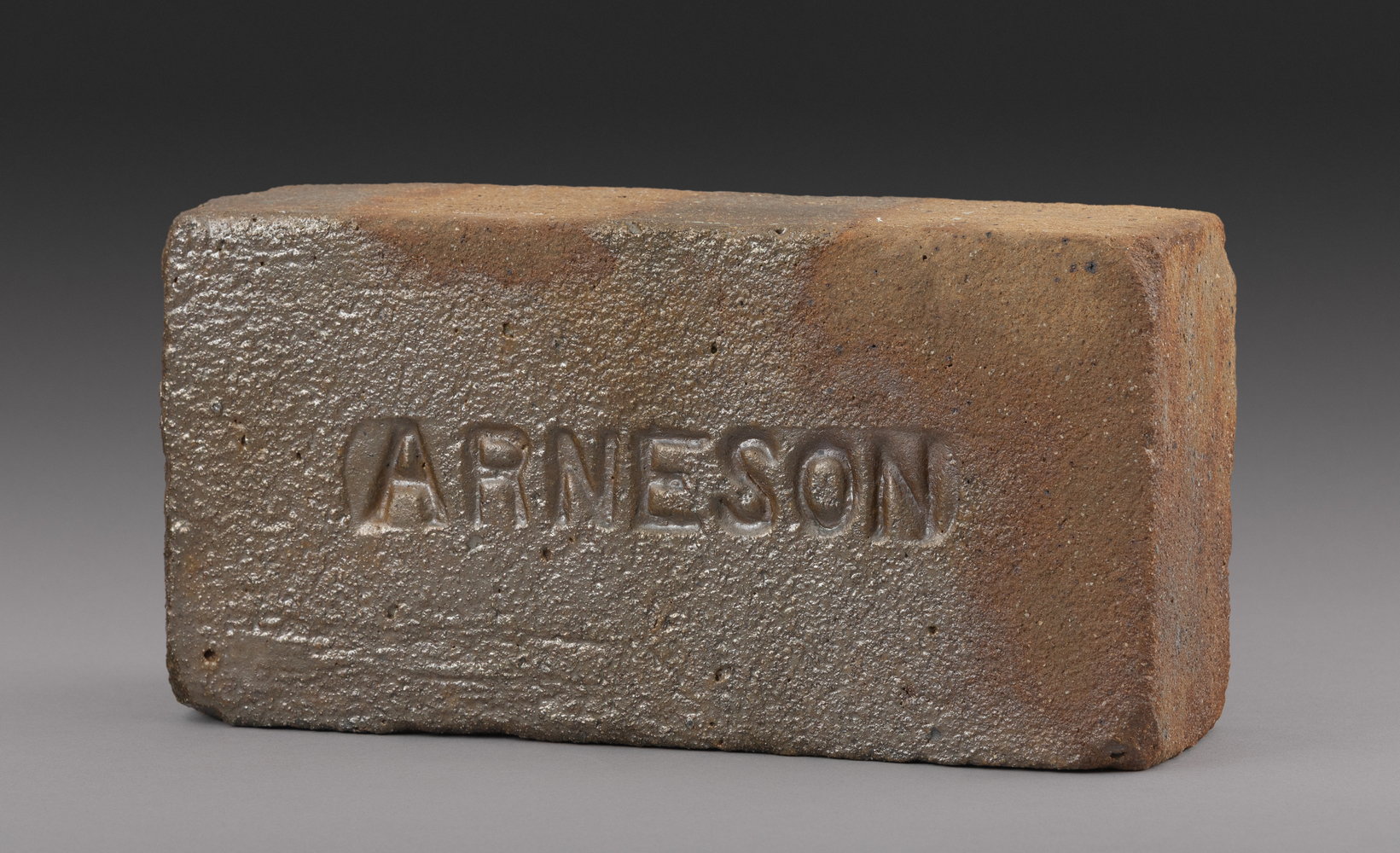
Face Brick, 1981
ceramic
4 1/4 x 9 1/4 x 2 3/4 in.
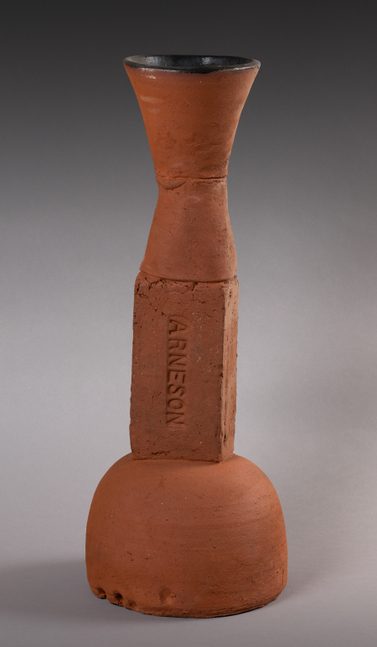
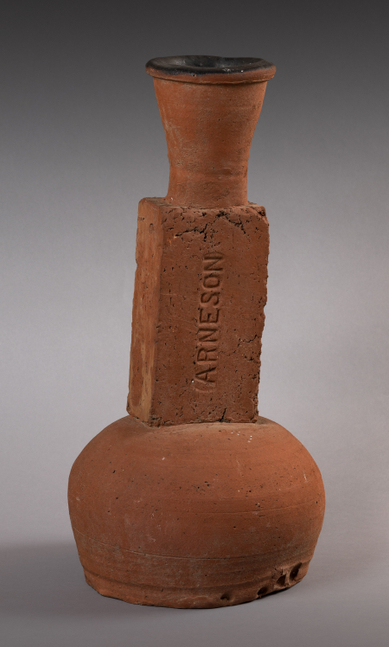
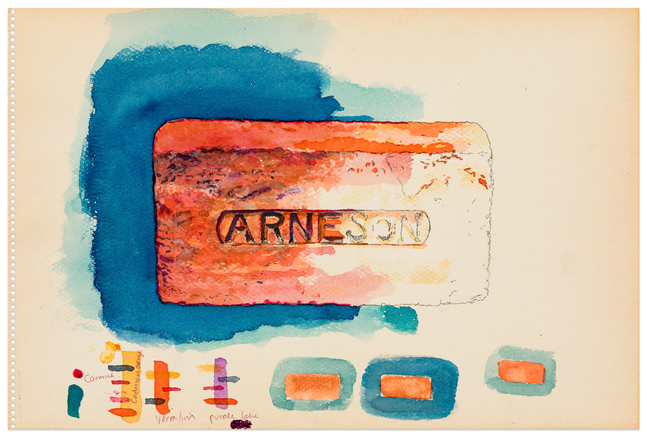
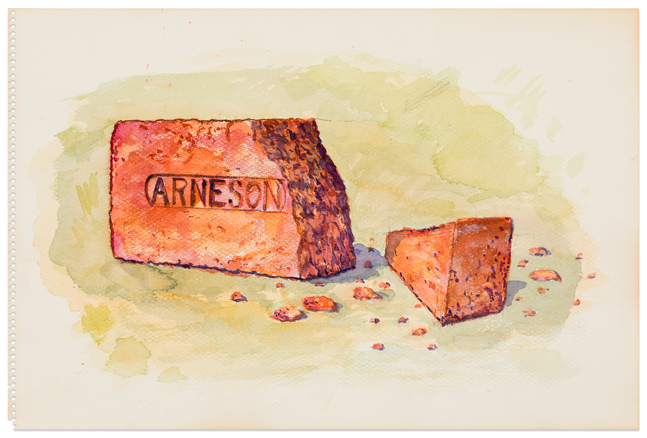
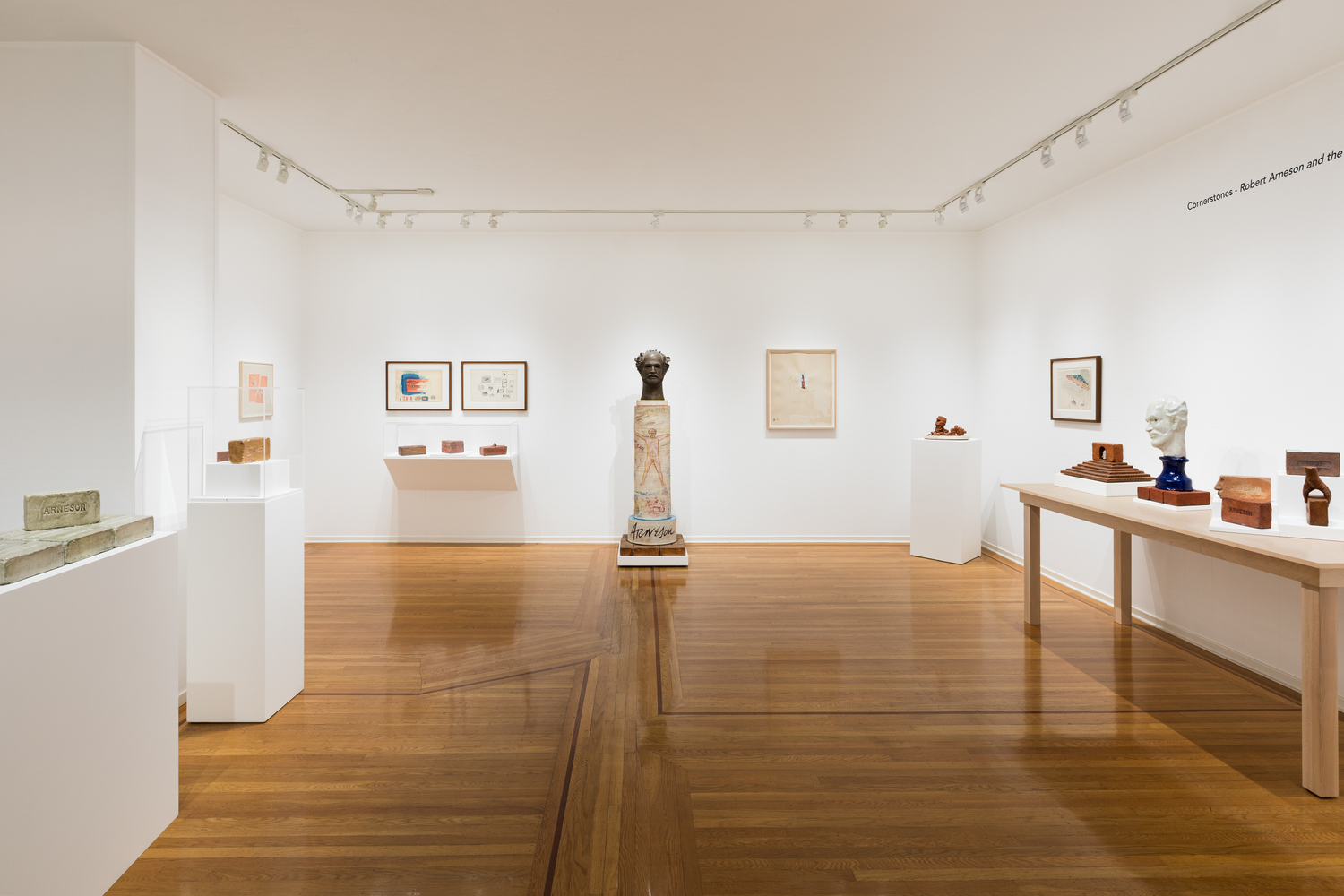
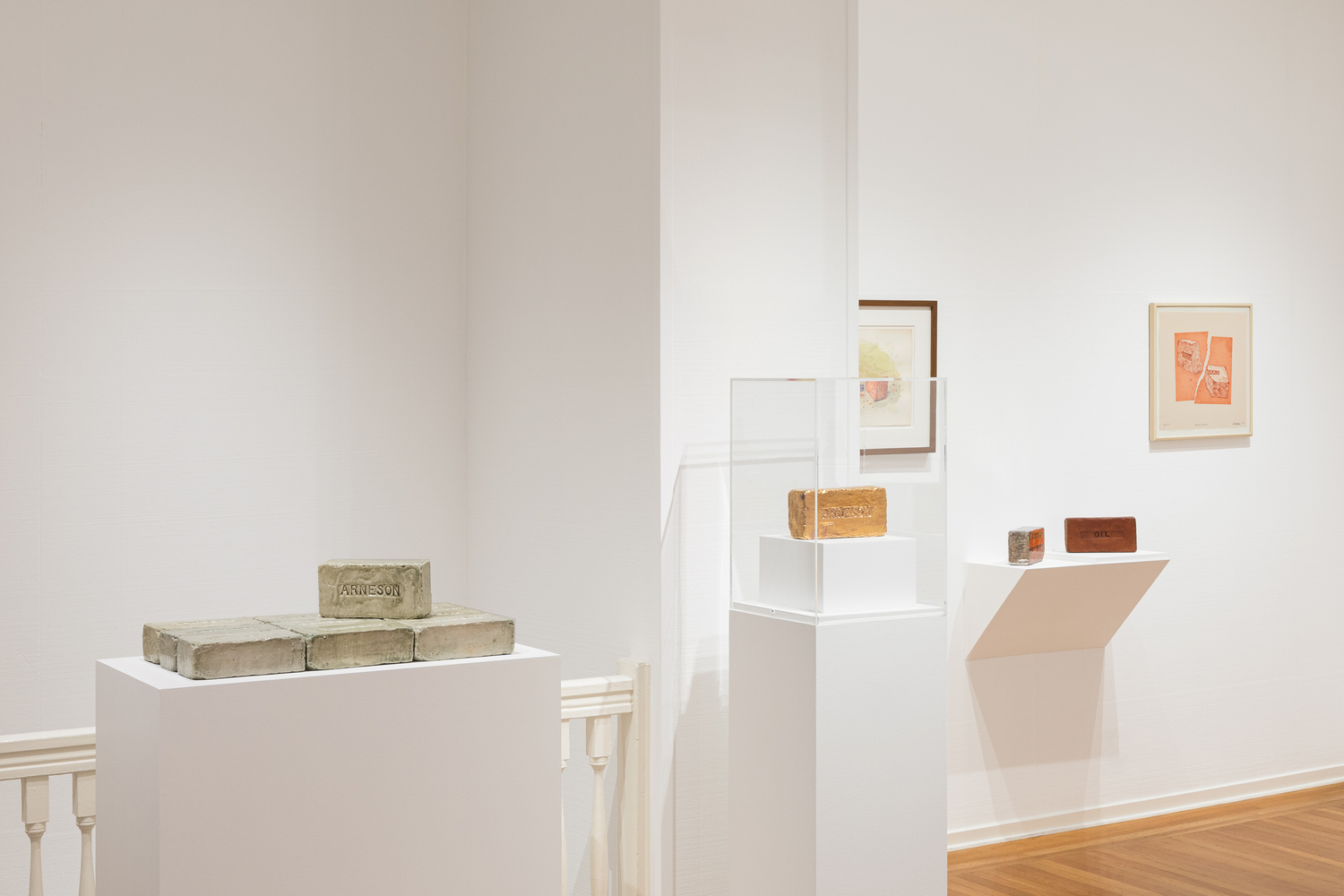
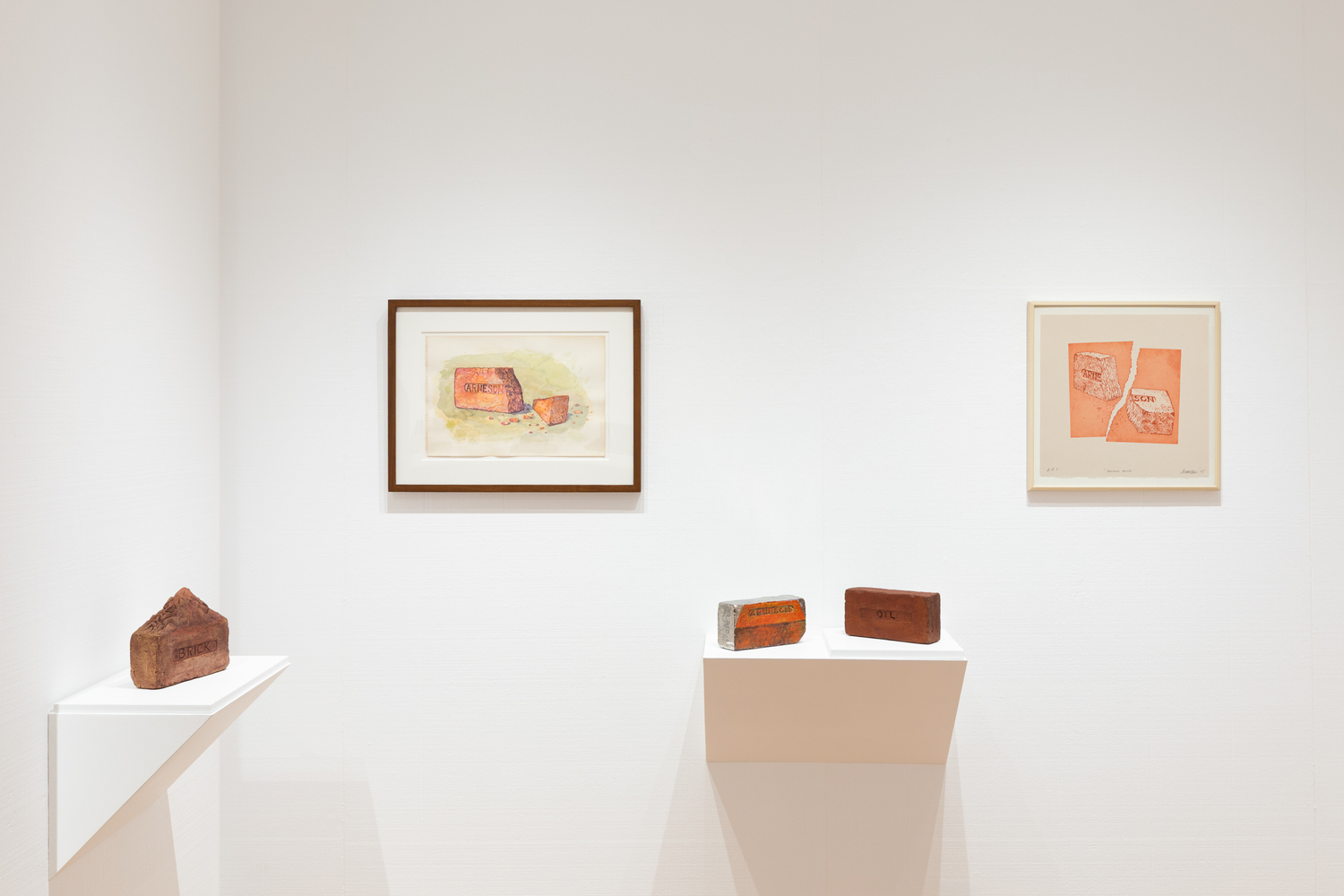
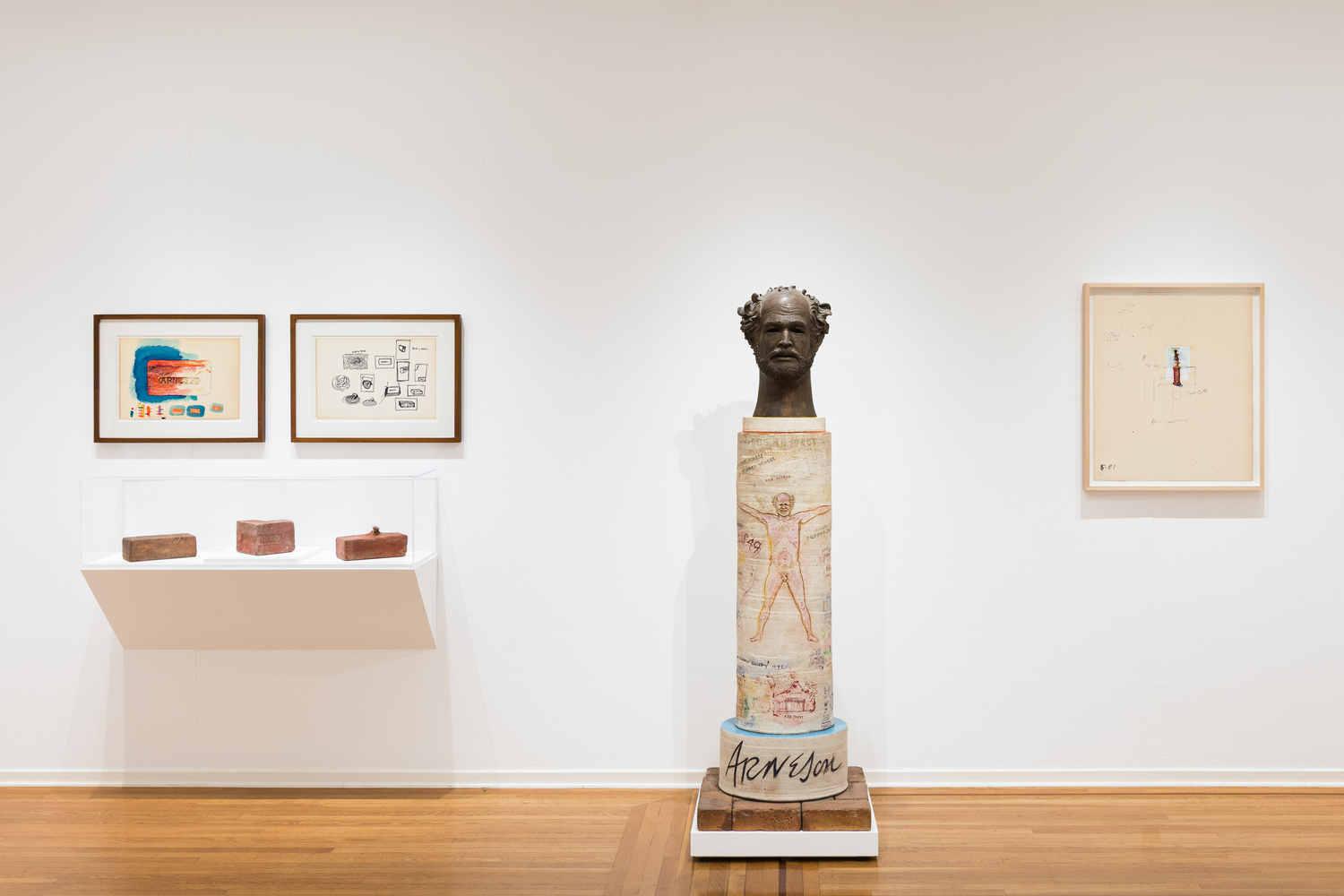
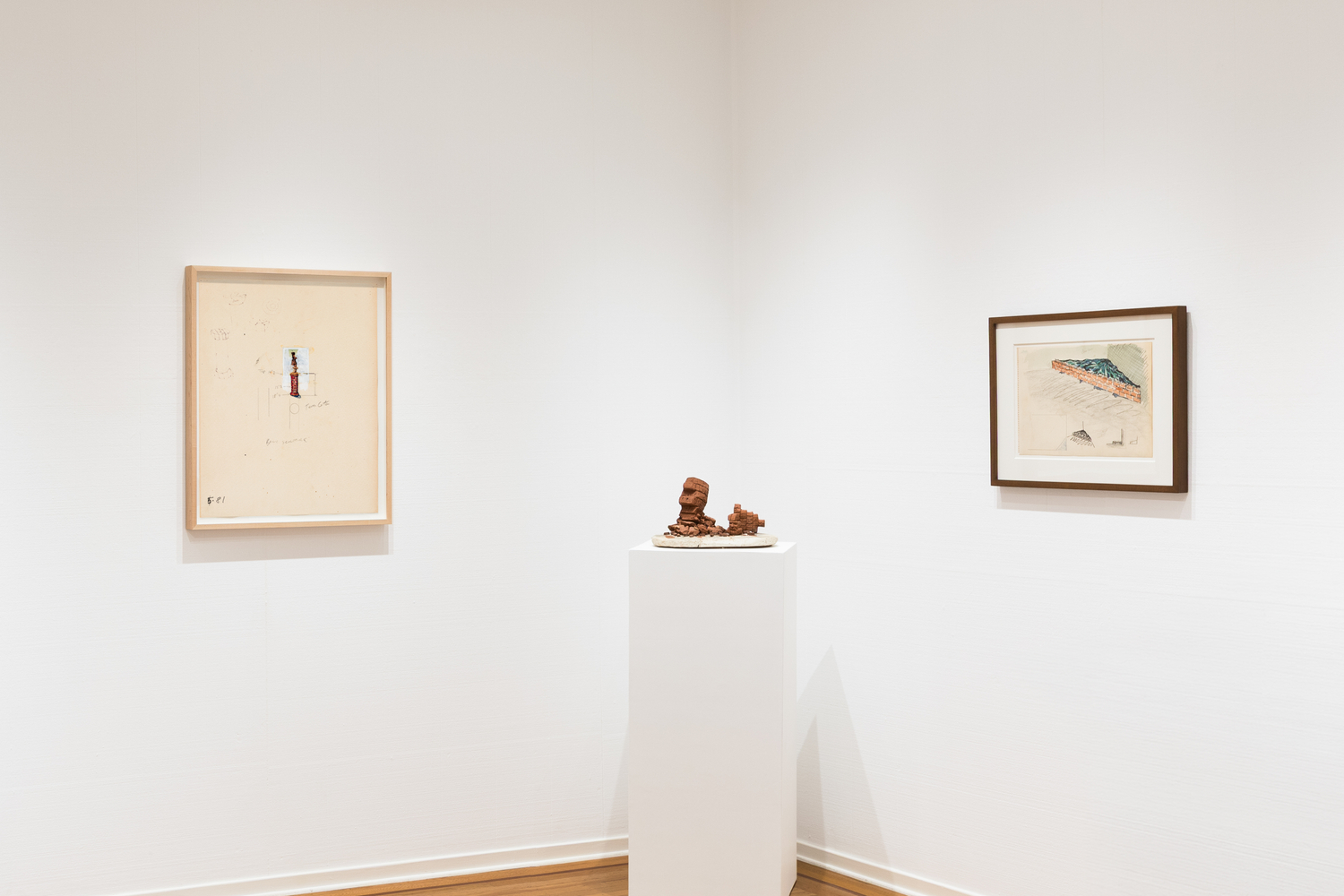
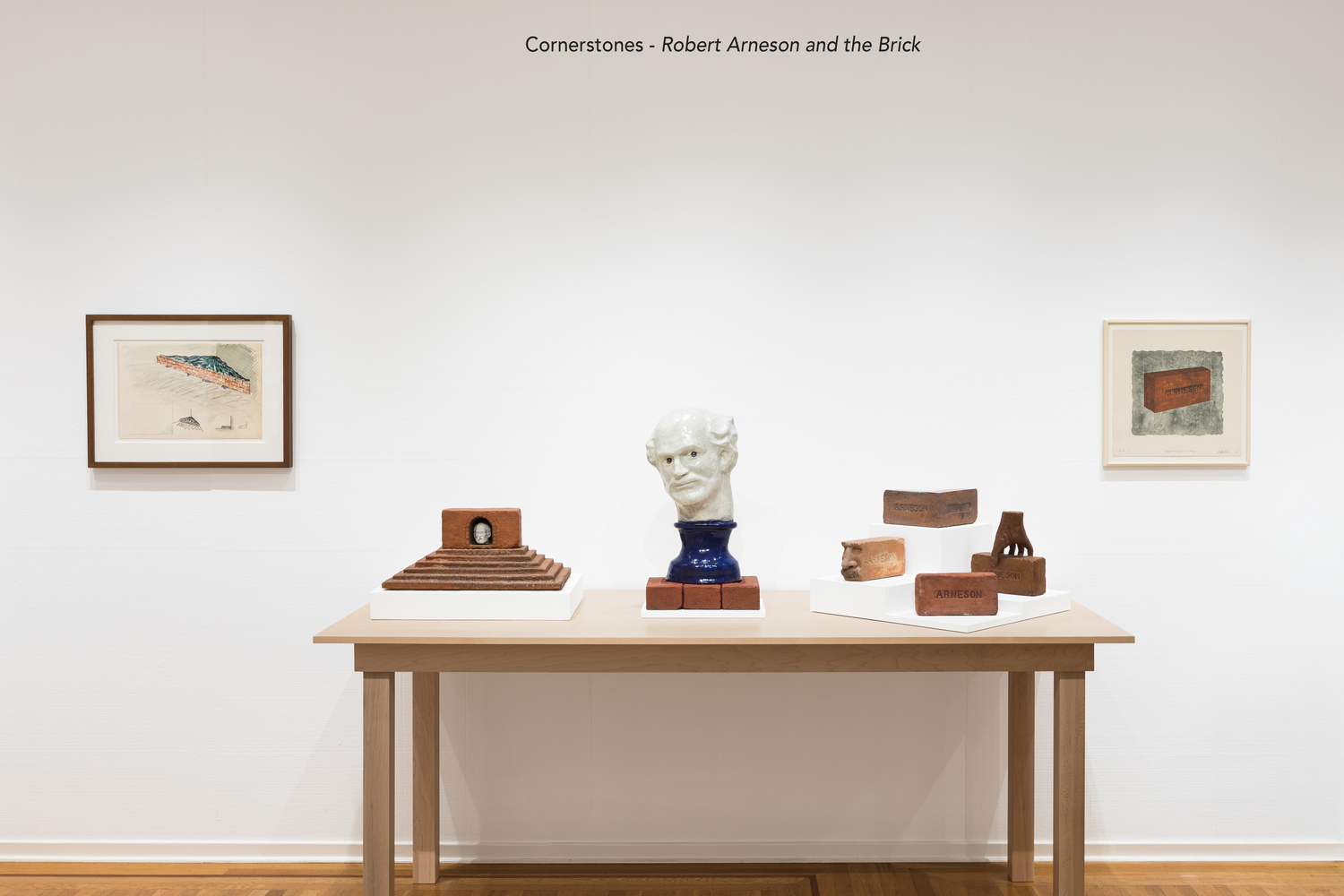
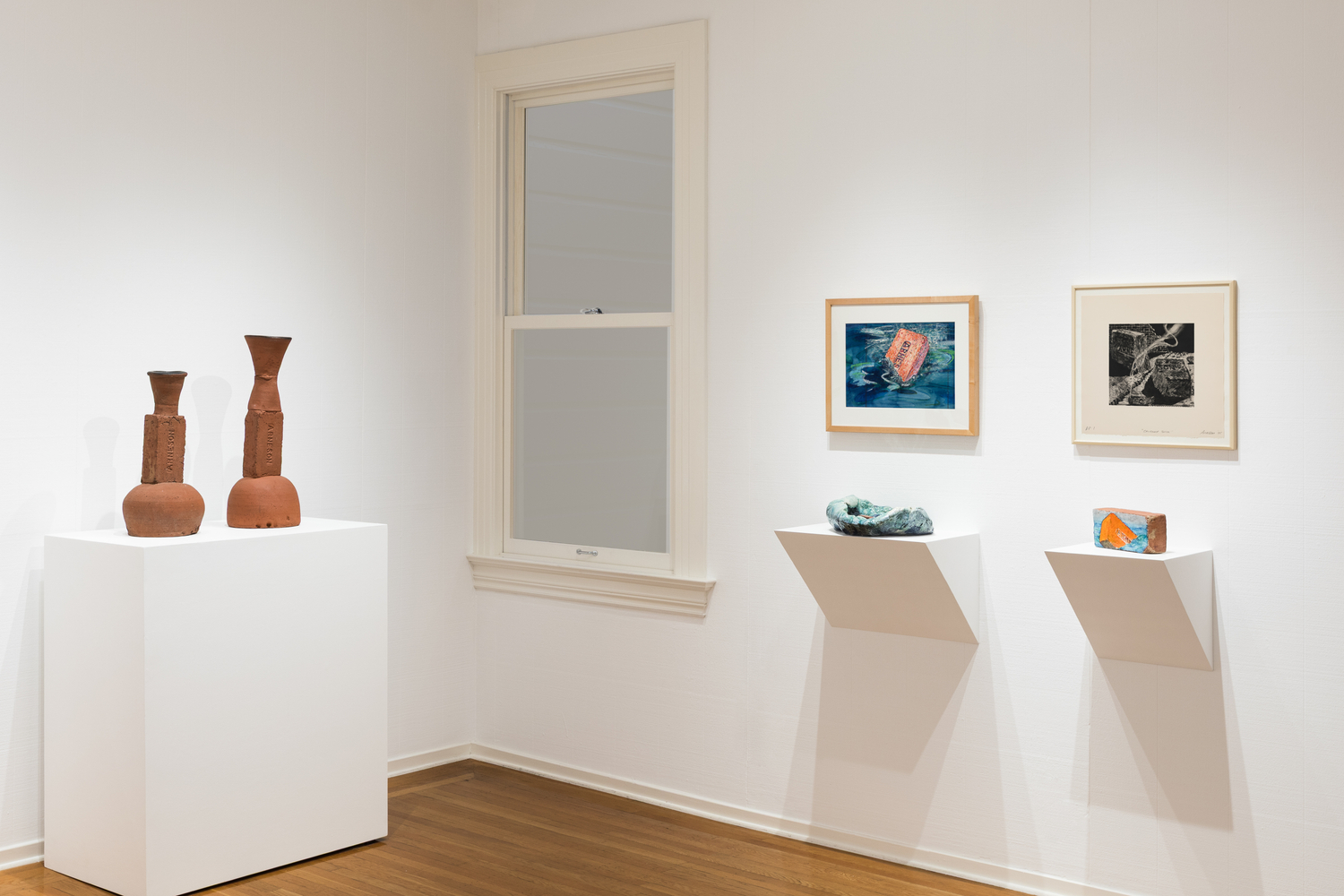
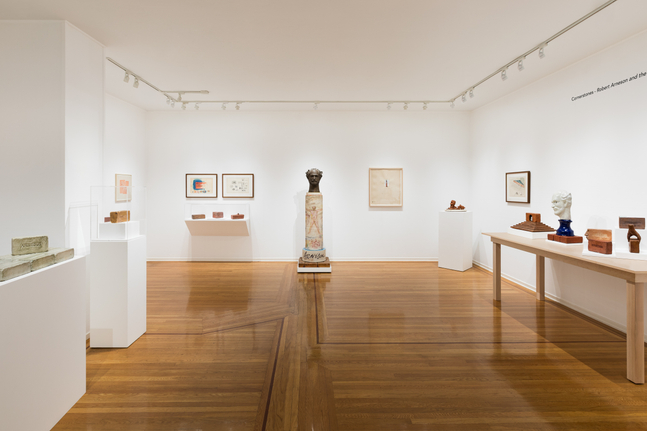
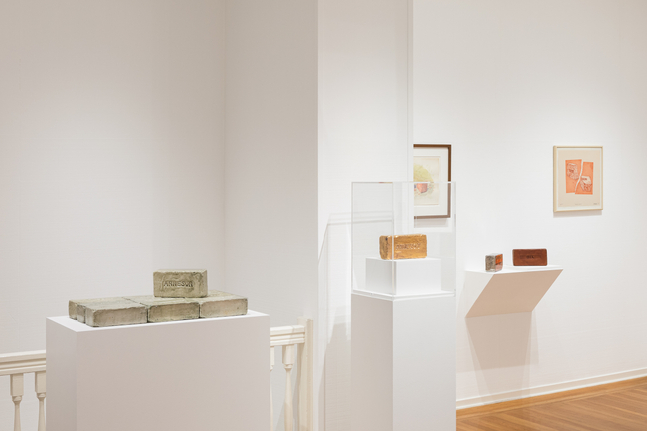
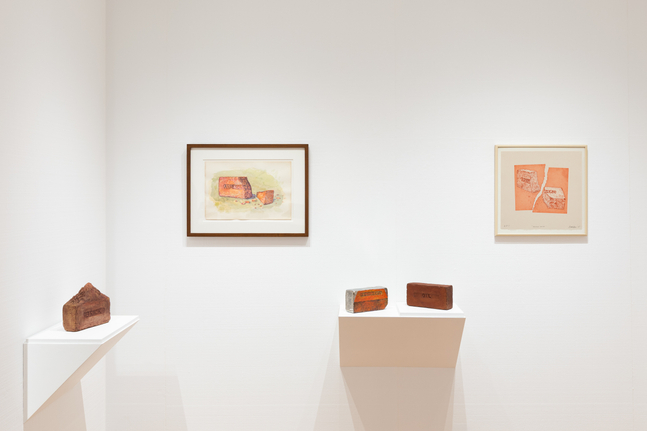
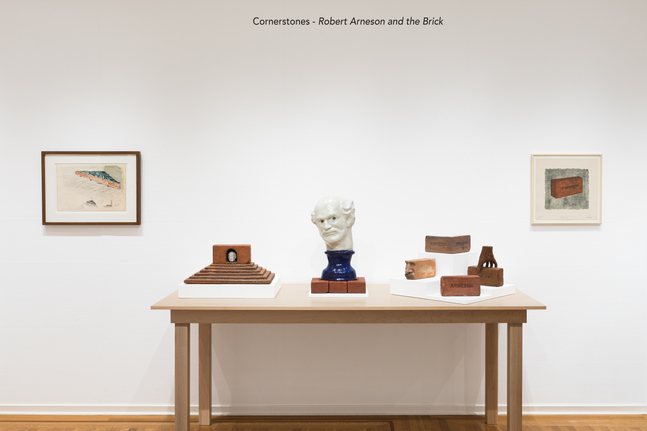
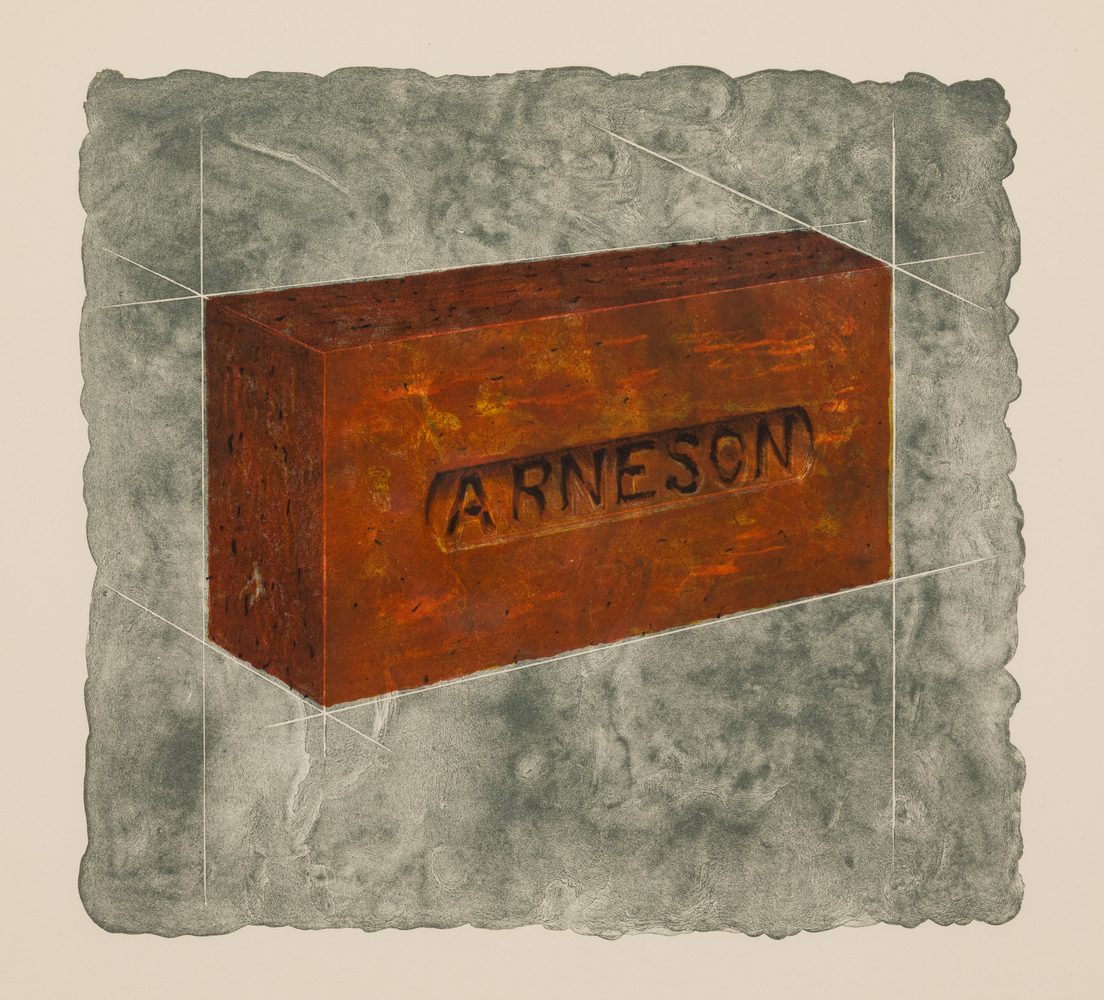
Paul Thiebaud Gallery is pleased to announce the opening of Cornerstones – Robert Arneson and the Brick on Saturday March 21, 2026, with a reception from 3-5pm and a gallery talk at 3:30pm. Featuring more than 25 never before or rarely seen ceramic and bronze sculptures, drawings, and prints, this exhibition is the first to focus on Arneson’s use of the brick as an integral form in the development and trajectory of his career. Employed as canvas, vessel, homage, surrealist expression, monument, conceptual object, and a medium for portraiture, Robert Arneson explored the possibilities of what a brick is and could be in greater dimension and depth than any other artist before him. The exhibition will be on view through May 9, 2026.
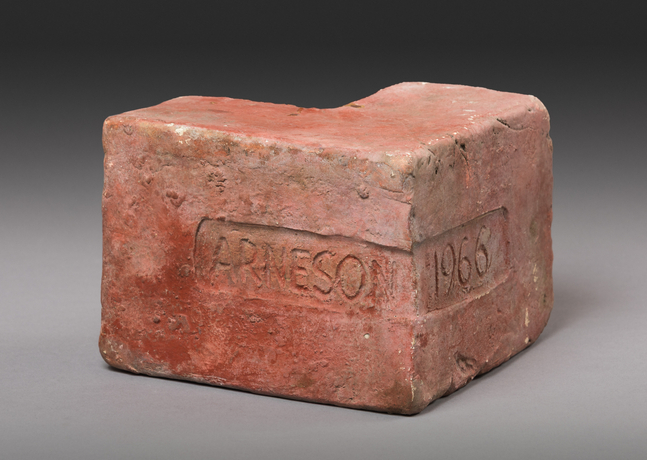
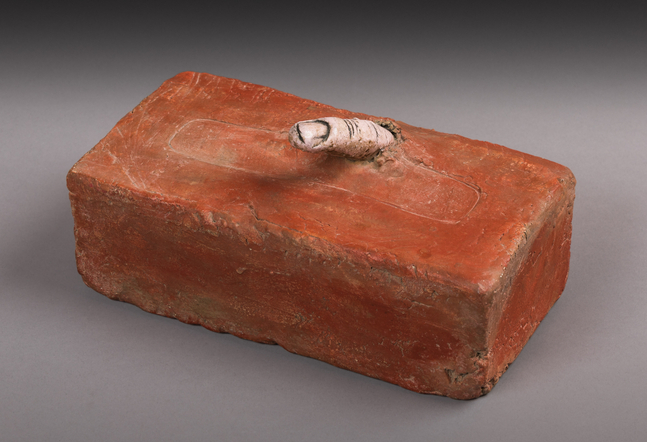
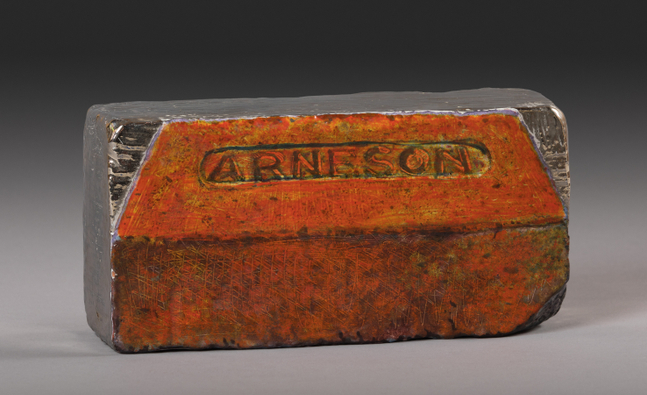
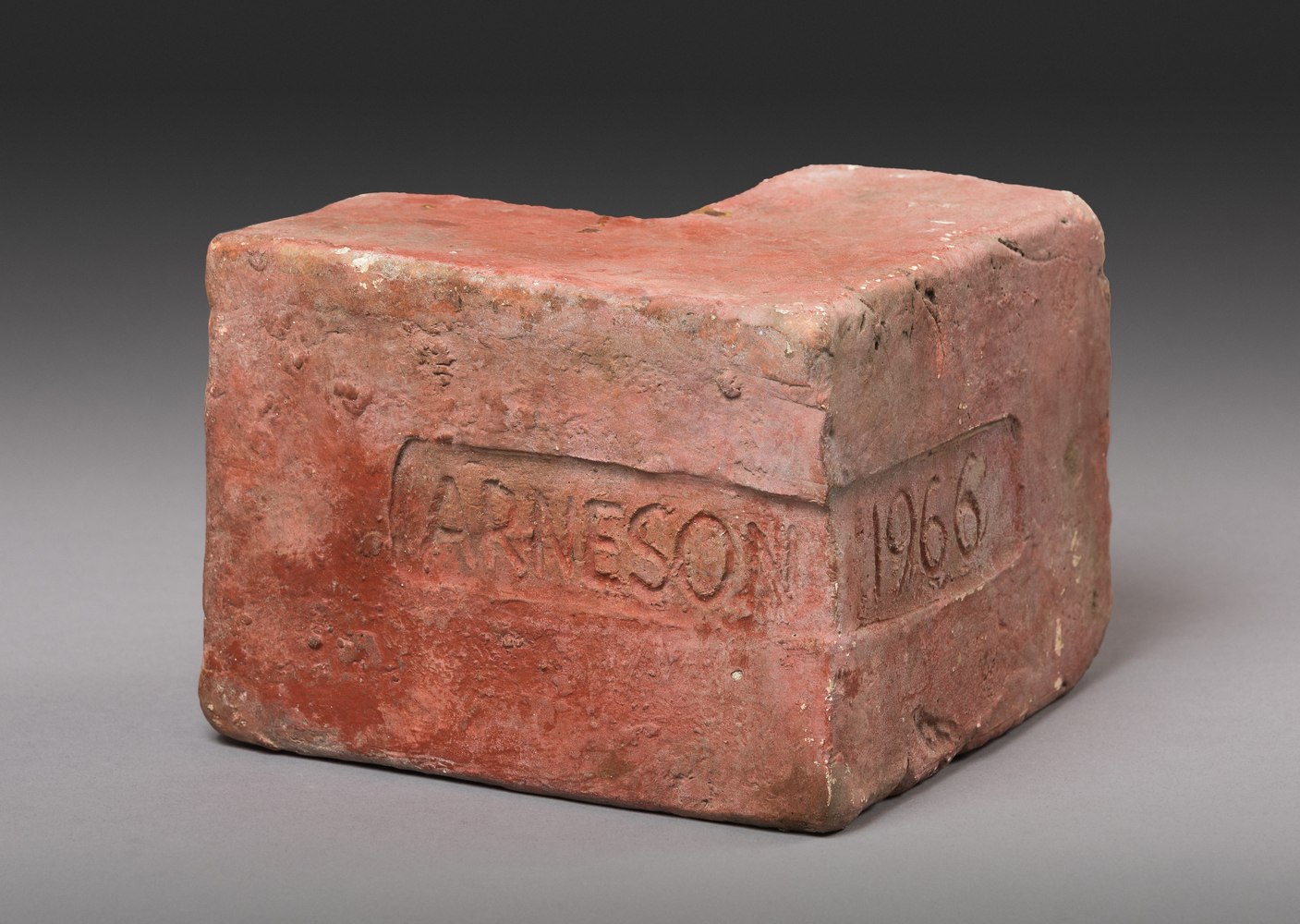
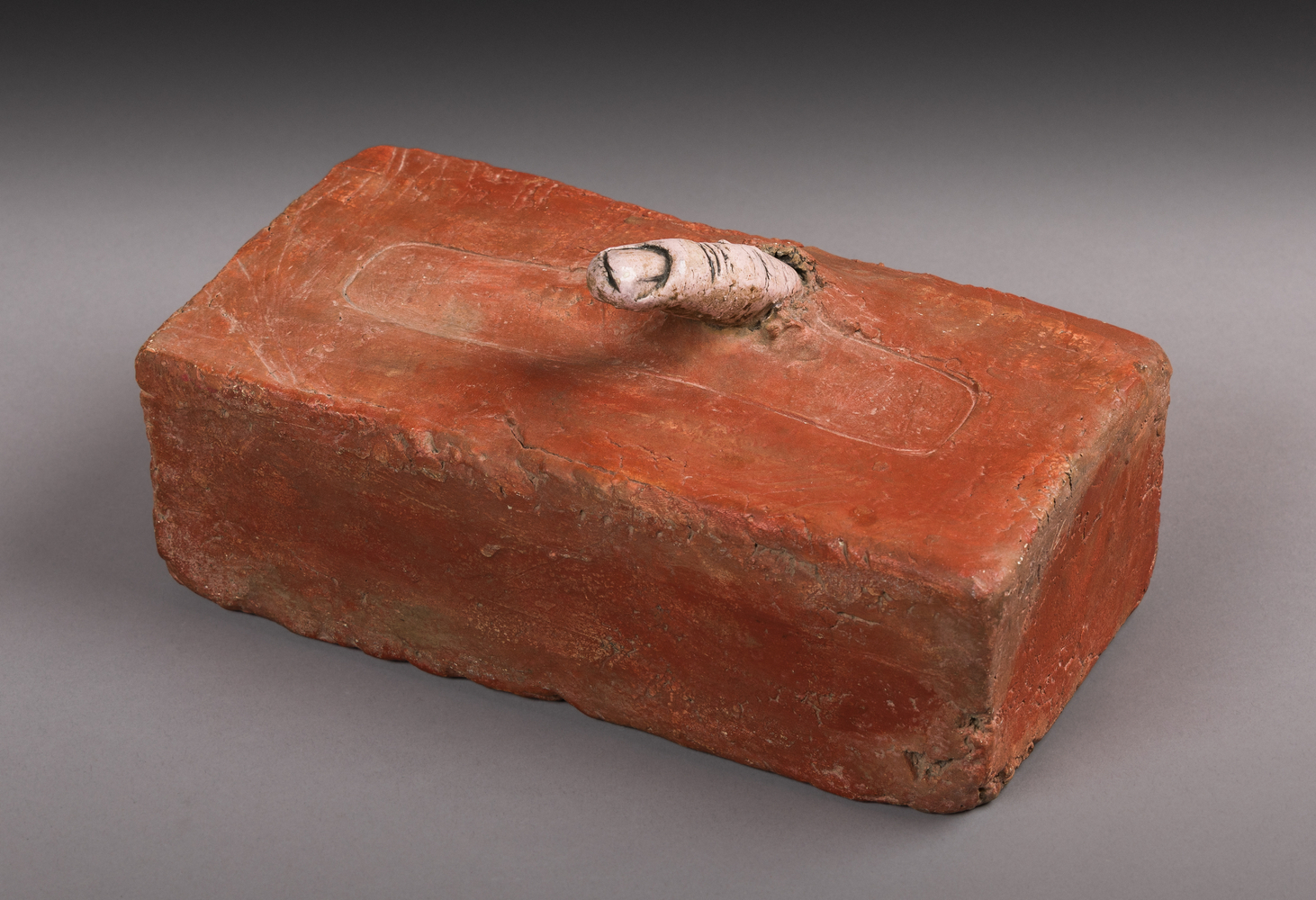
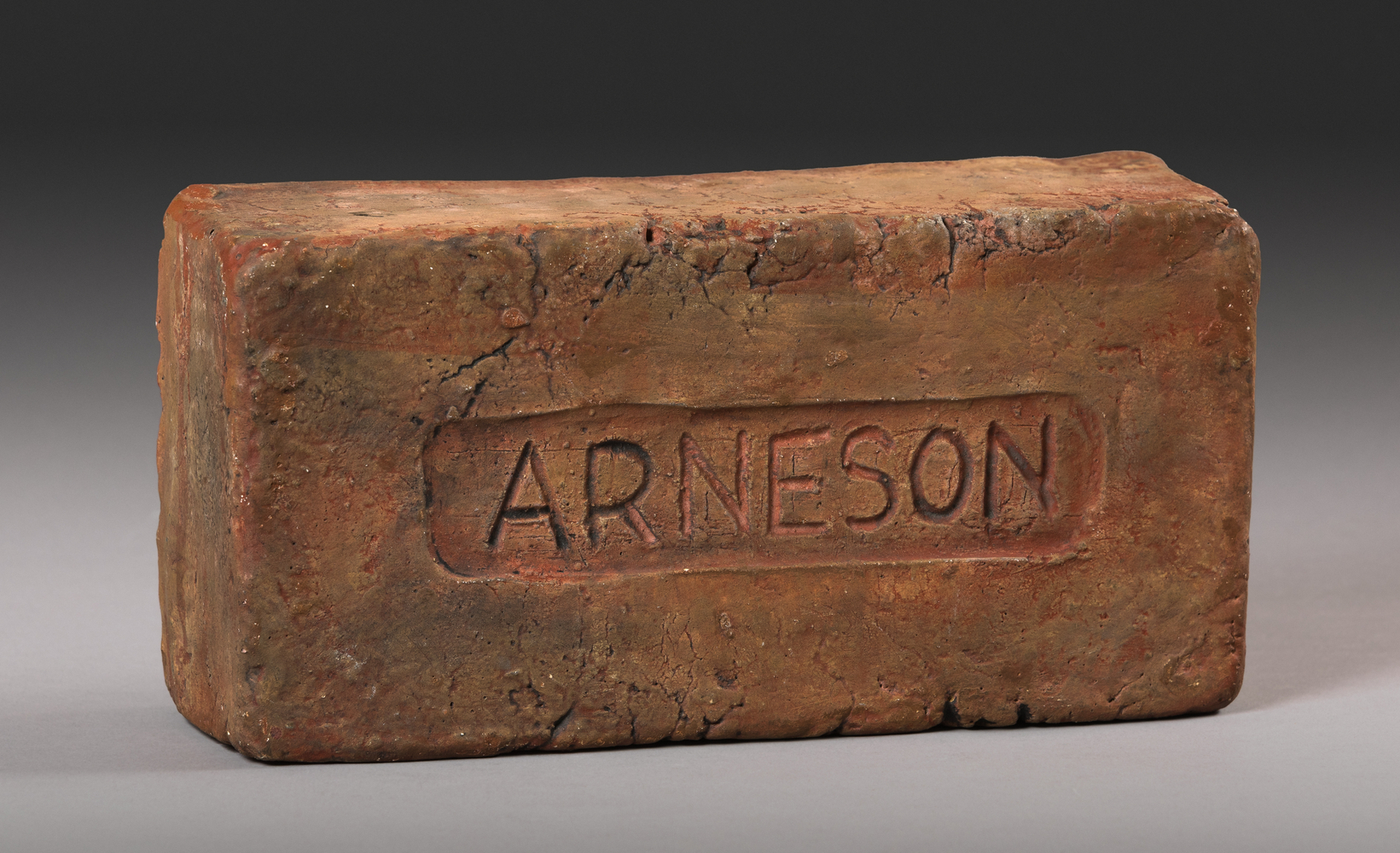
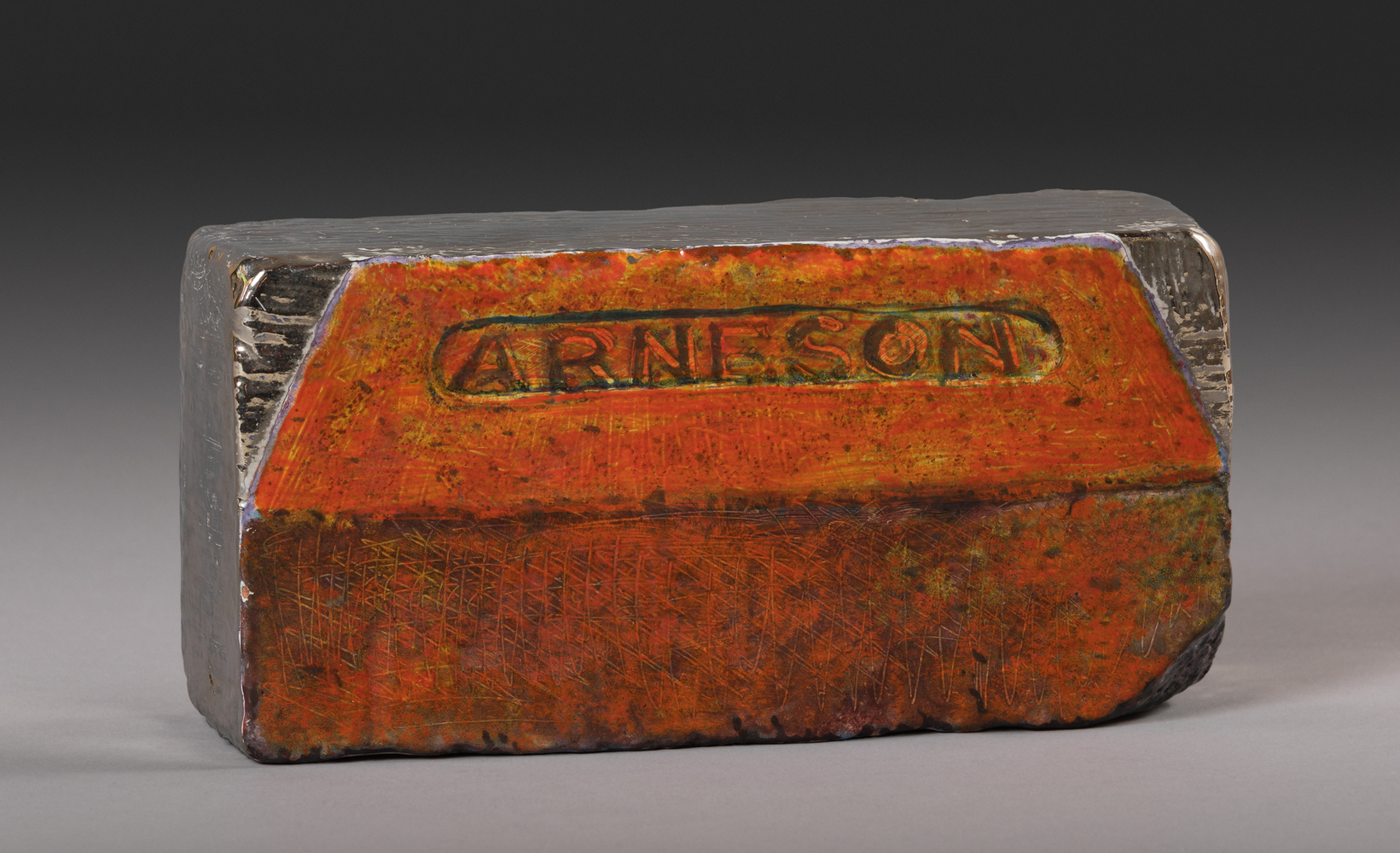
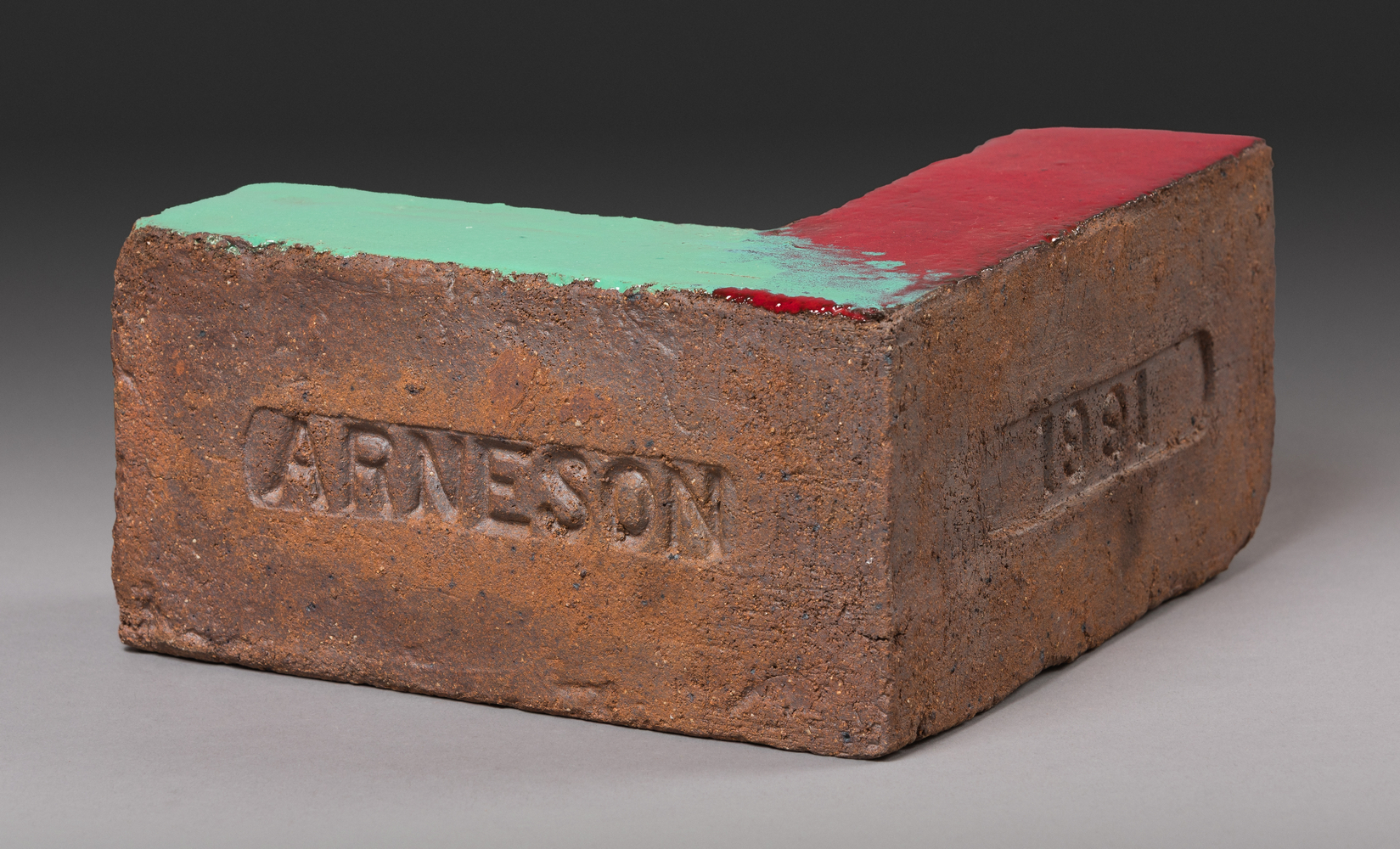
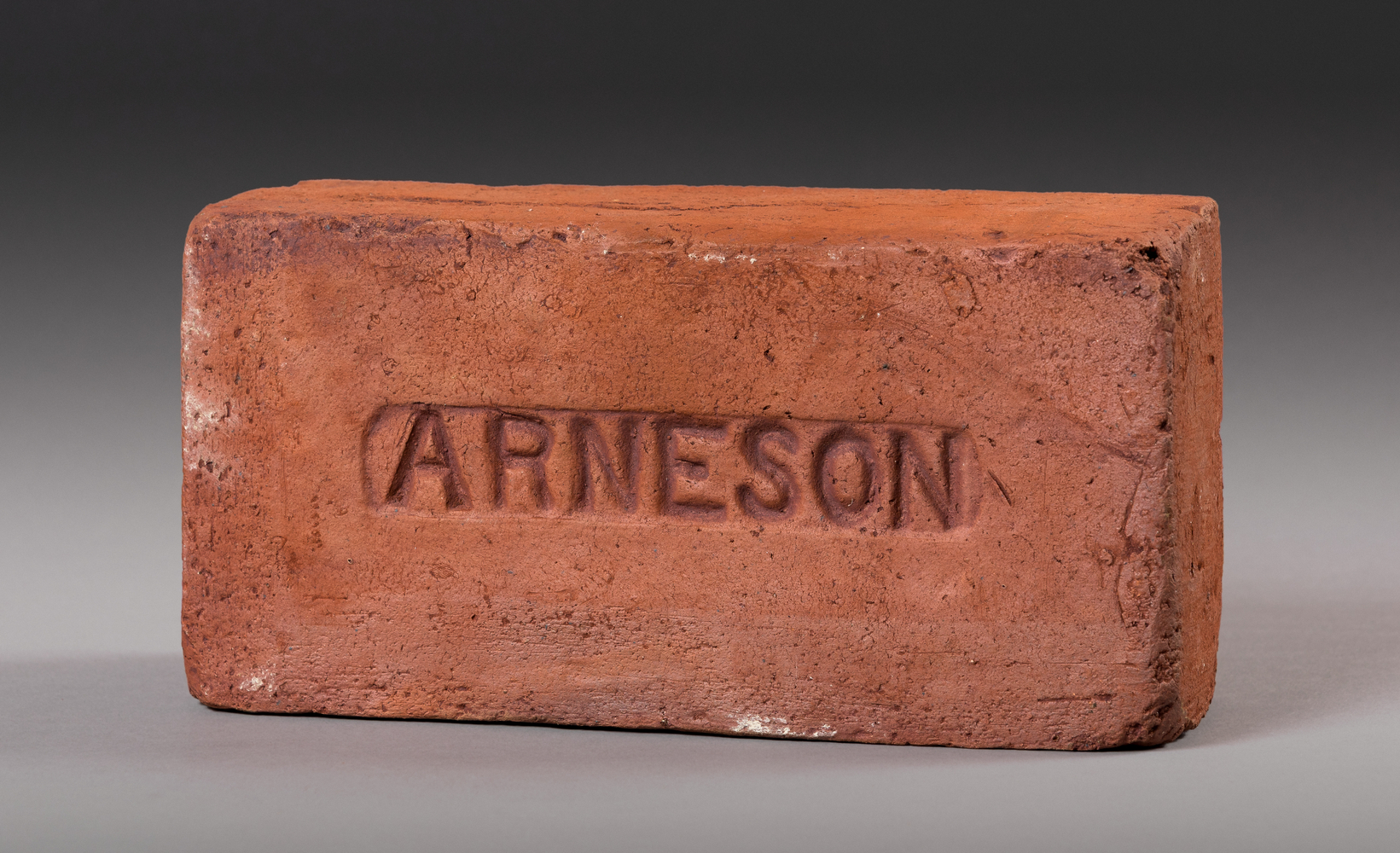
In the first half of the 1960s, Robert Arneson began investigating the history of ceramics and how the medium influenced the development of western culture. He first hit on the toilet as one of the greatest uses that clay had been used for and filtered that form through the lens of Pop Art to create a group of now notorious works. Around 1965, while looking for other common objects with a long history of use, Arneson settled on the humble terracotta brick as another subject for exploring his ideas. Among the first bricks he hand-made were a pair that have fingers emerging from their interiors, which Finger Brick (ca. 1965) is one of. This surrealist gesture was tied to an earlier series of works that reinterpreted Pop Art through a new lens. Not long after, Arneson produced the corner shaped Brick (1966), stamping his name and the year in its surface, and marking one of the first instances of his attaching his personal identity to the object. From there, Arneson went on make molds of brick forms to help speed up the production process.
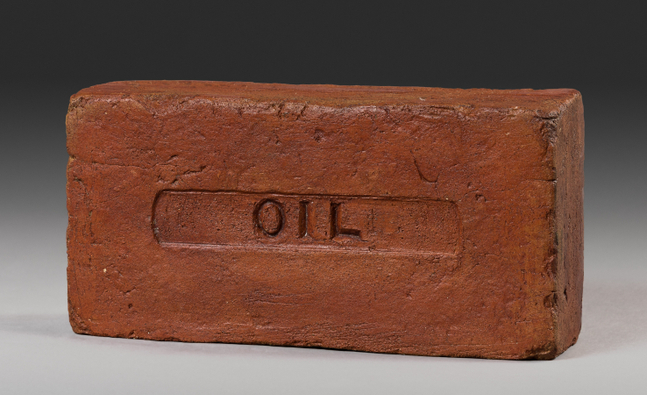
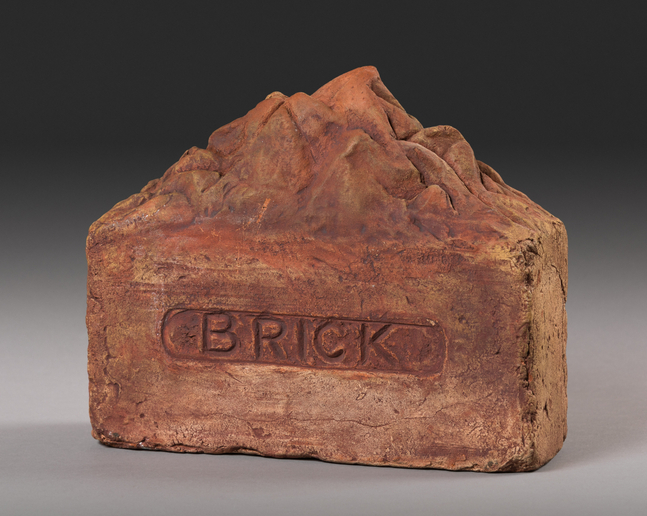
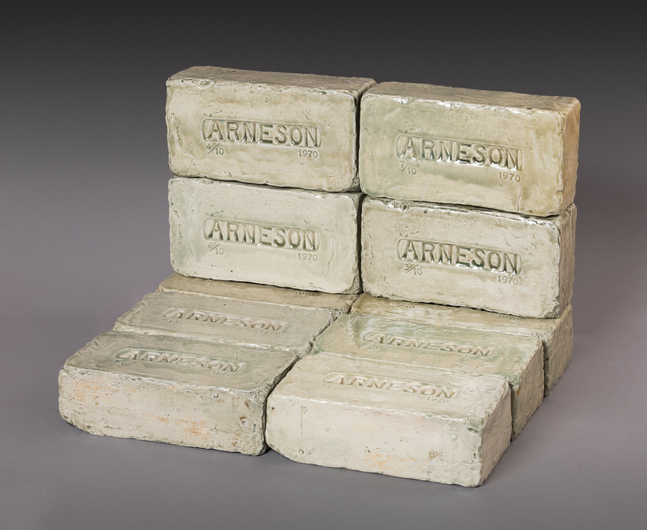
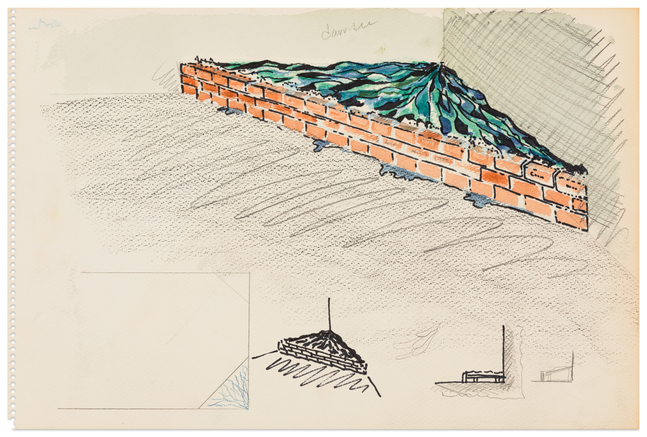
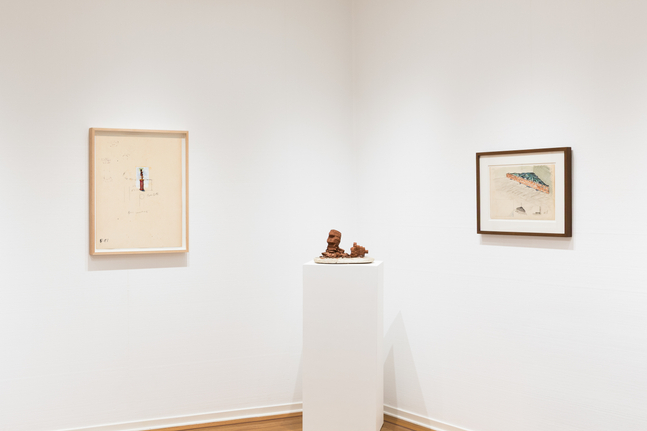
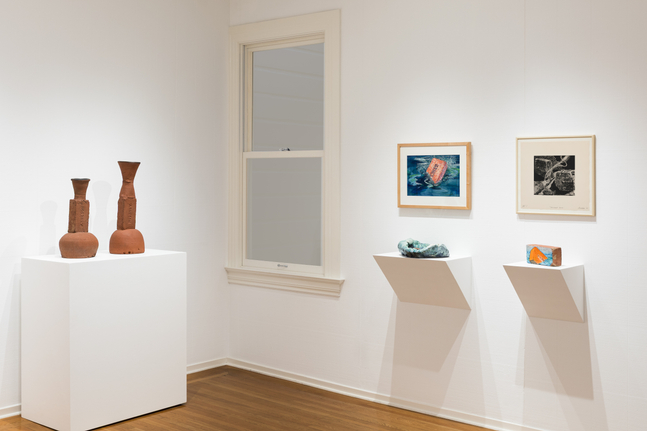
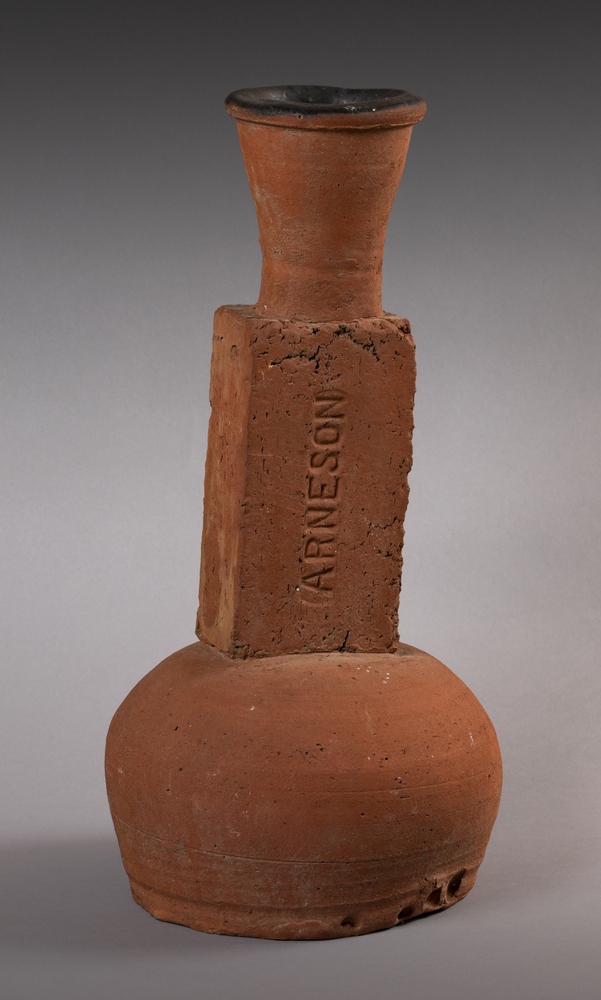
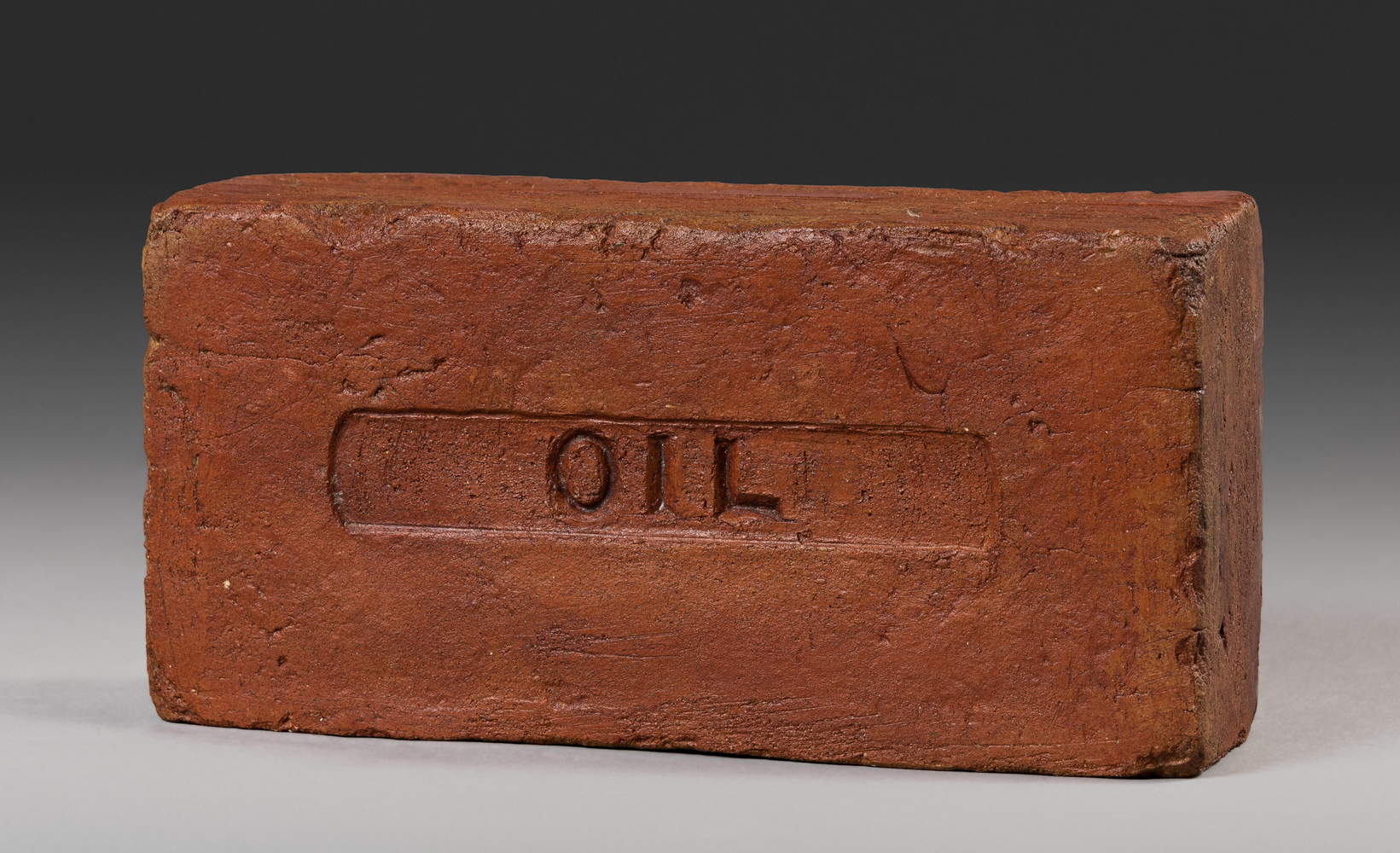
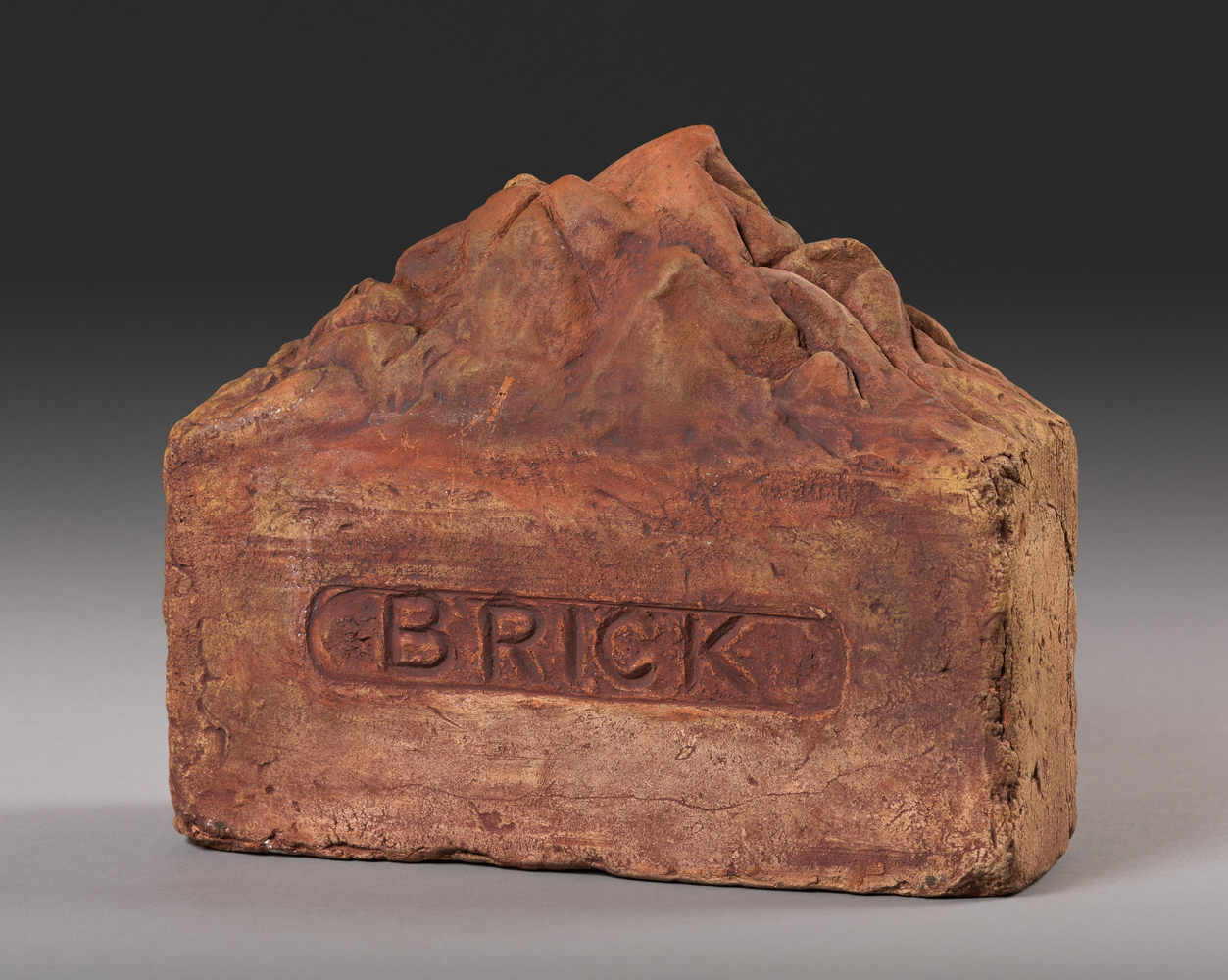
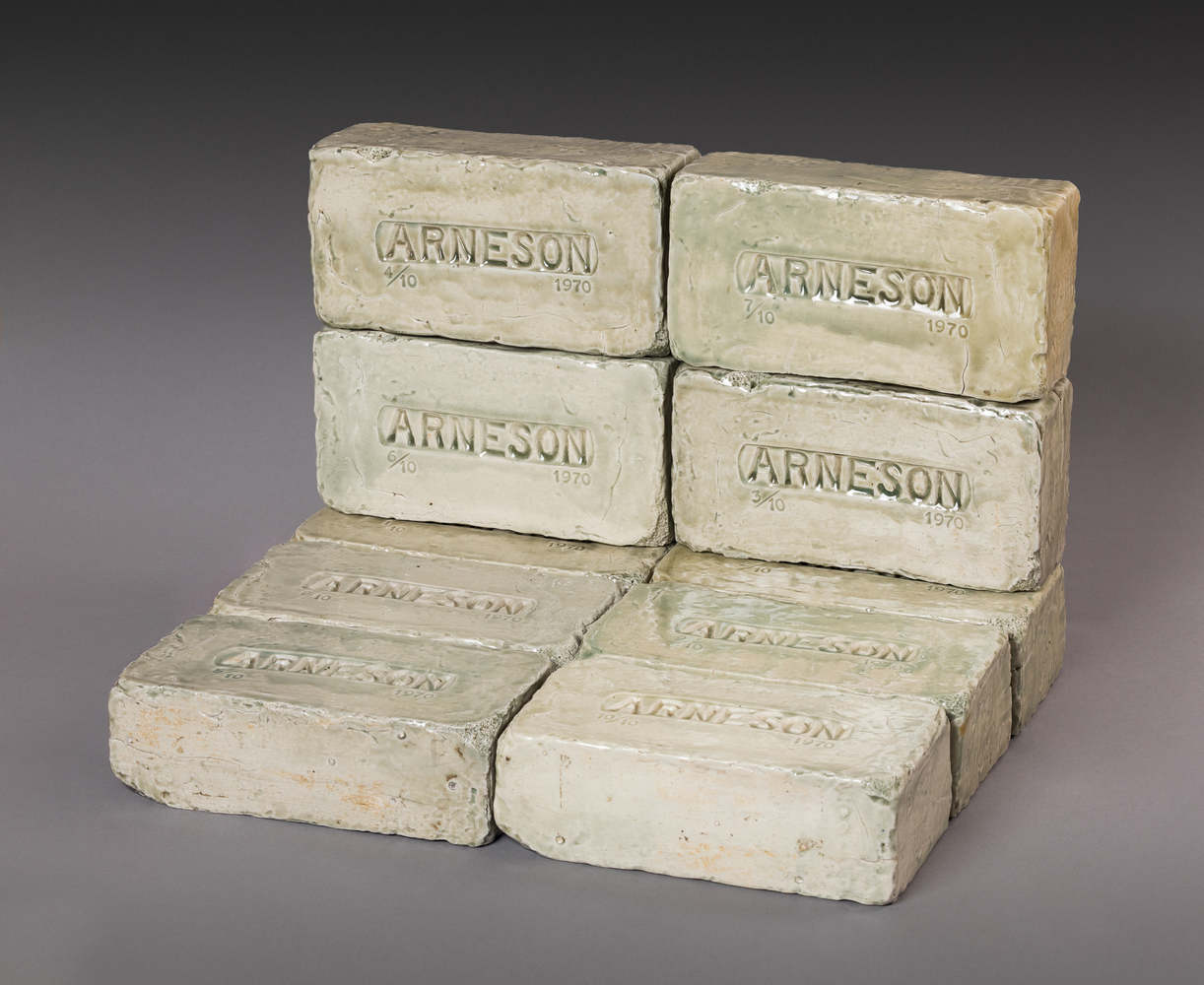
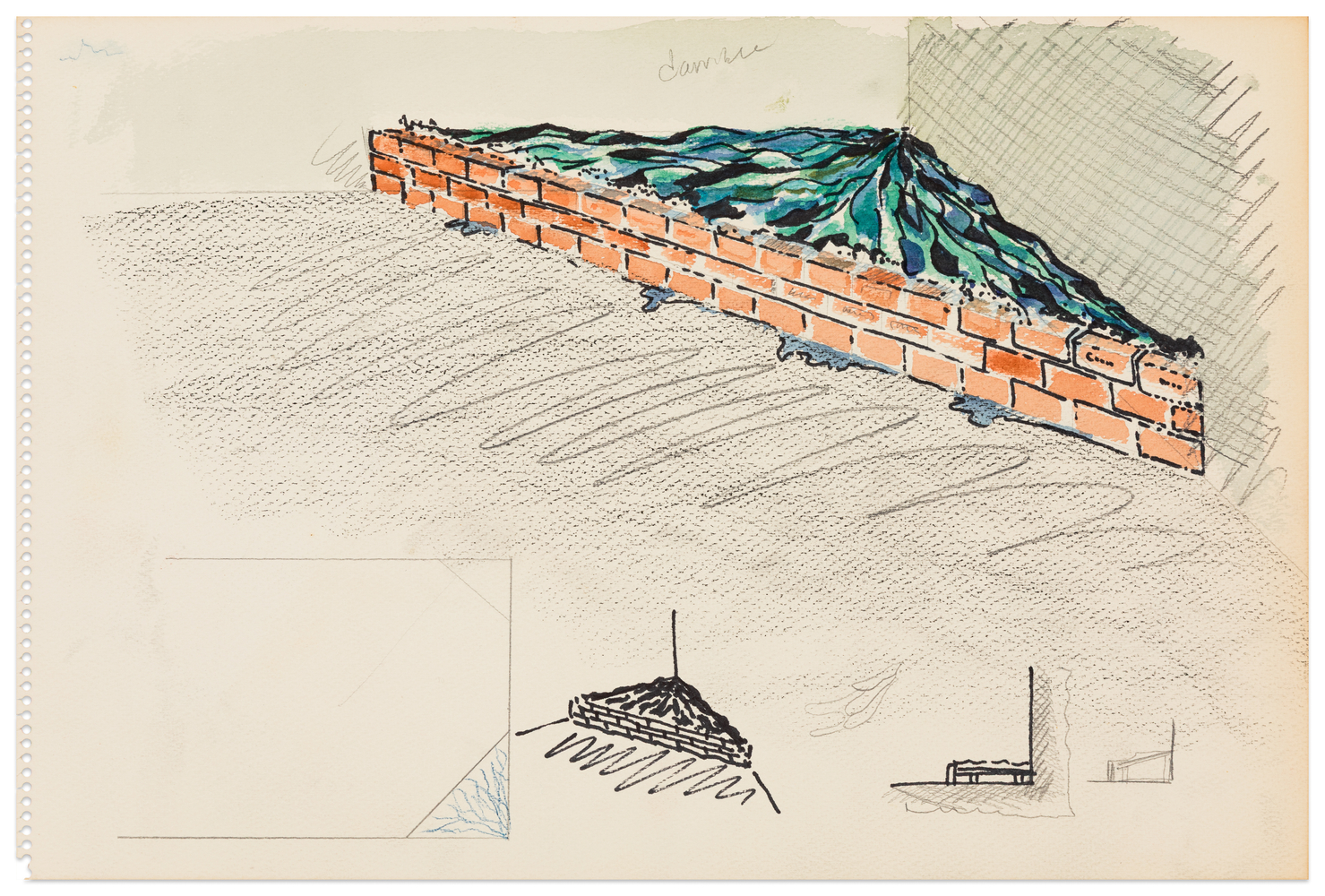
As the 1960s progressed, Arneson began employing conceptual principles to explore the idea of what a brick is and what it could be. The brick as vessel was one concept that emerged, of which Oil Brick (1969) is one of a series where Arneson either entombed an object inside of it or impregnated the fired clay body with different substances. The brick as homage is another idea he explored, with the Sung Edition (1970) of ten porcelain bricks with celadon glazes being created to honor the achievements of the master ceramicists of China’s Sung Dynasty. Still a third use was the brick as a “canvas,” where he would add on top of the brick ideas for other sculptures. Mountain Brick (1969) can be considered a study piece for the larger series of mountain-based works Arneson went on to create. A fourth was the brick as an erotic object, here represented by two Brick Vase pieces (both 1974) whose darkly glazed rims and interiors impart a sexual charge.
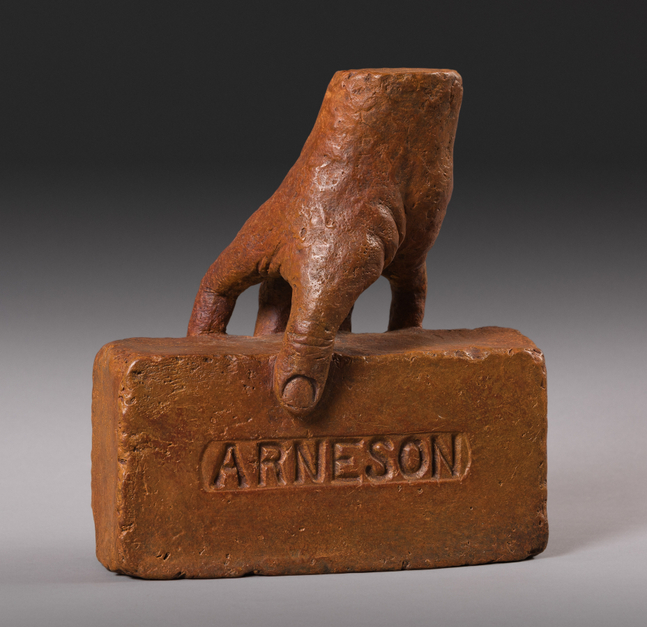
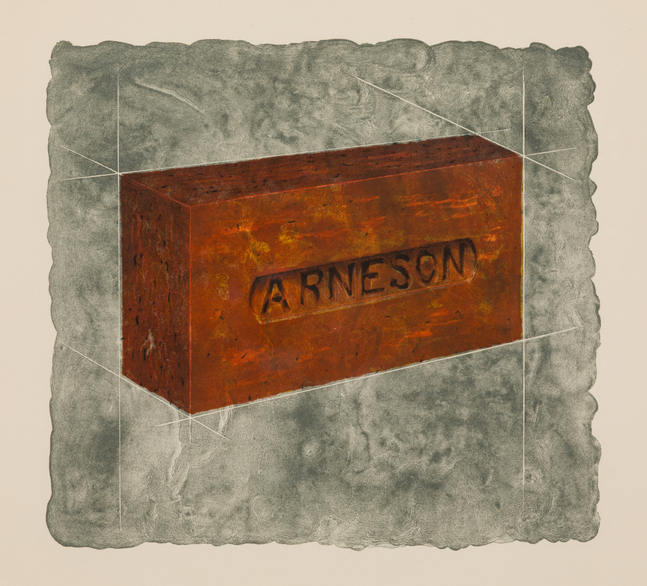
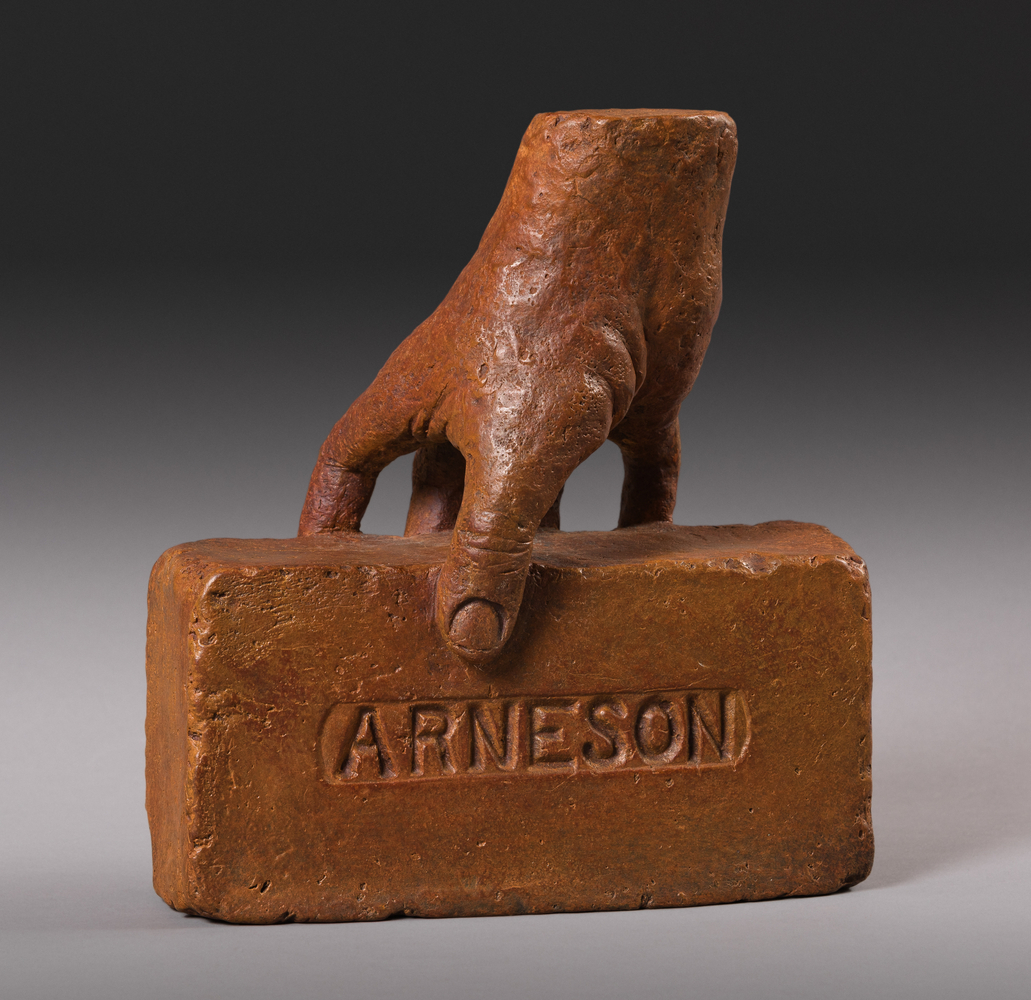
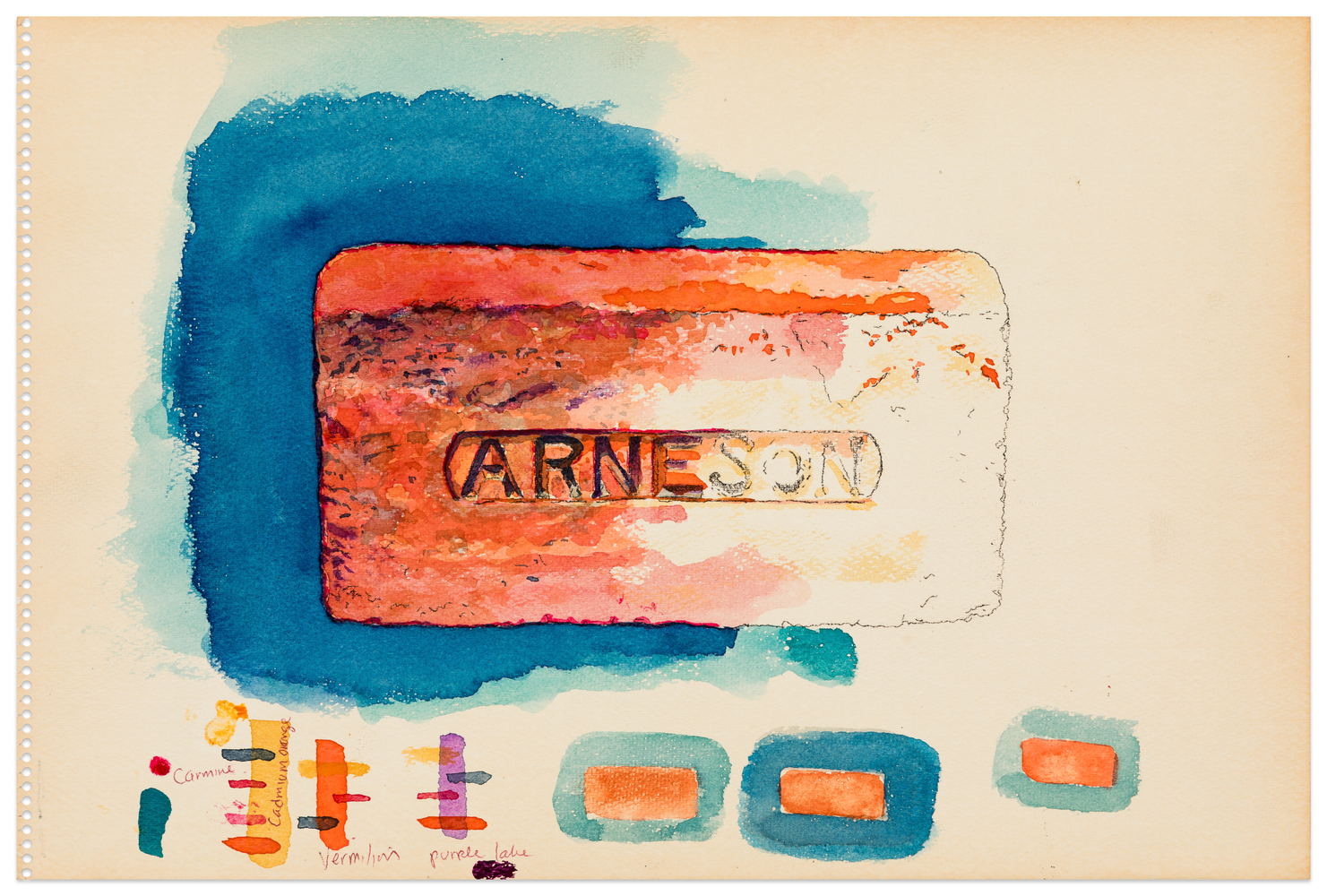
However, the most important and consequential concept he hit upon was the brick as a form of portraiture. This took several forms, with the first iteration being the Dada inspired format where Arneson simply stamped his name into the brick form (Brick, 1966). The other saw Arneson either carving his likeness into the short ends of bricks, with Face Brick (1981) being a classic example, or attaching some other part of his body to brick, as he did in Hand Brick (1991). These pieces would prefigure and later compliment Arneson’s extensive use of portraiture in his work during the latter half of his career.
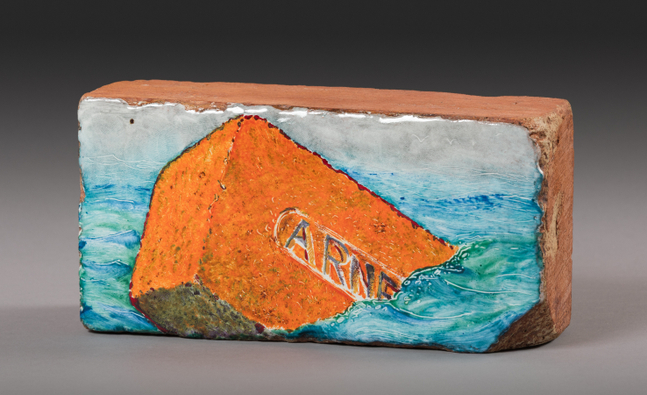
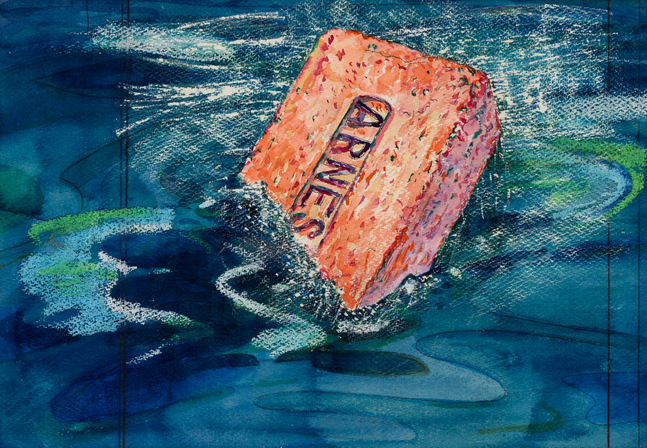
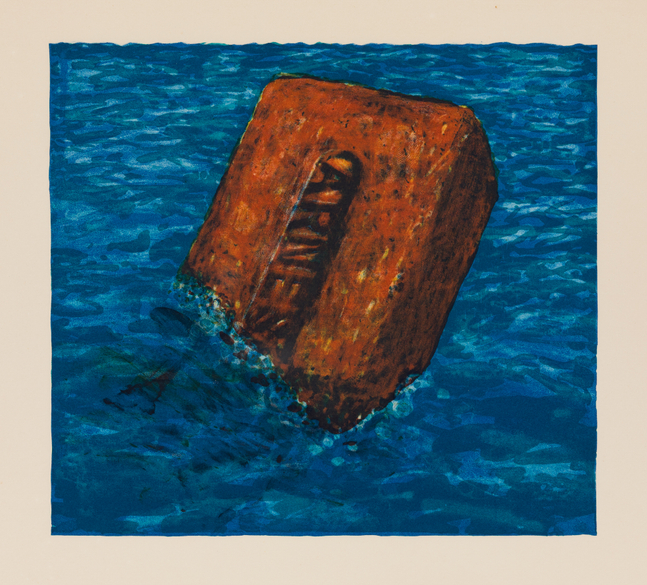
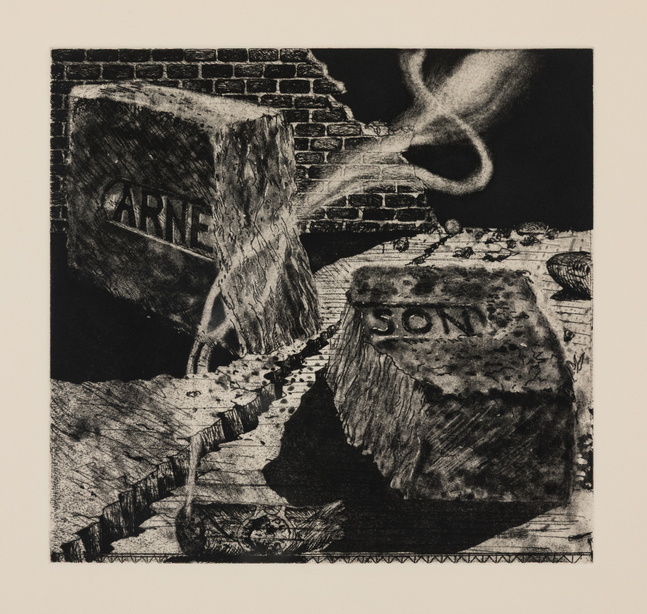
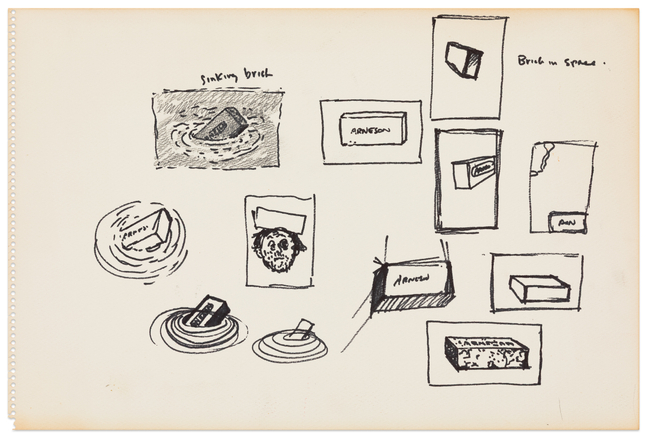
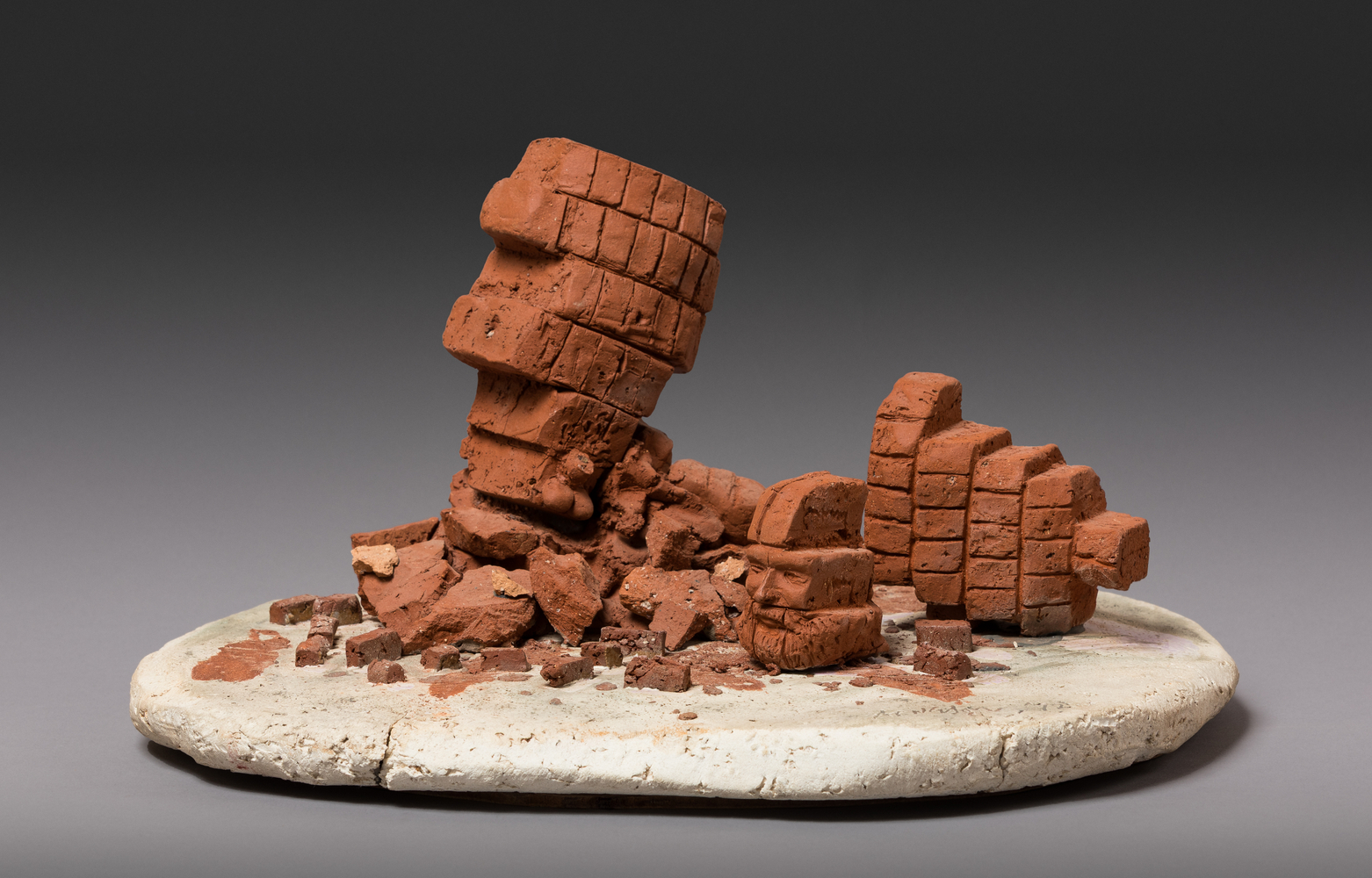
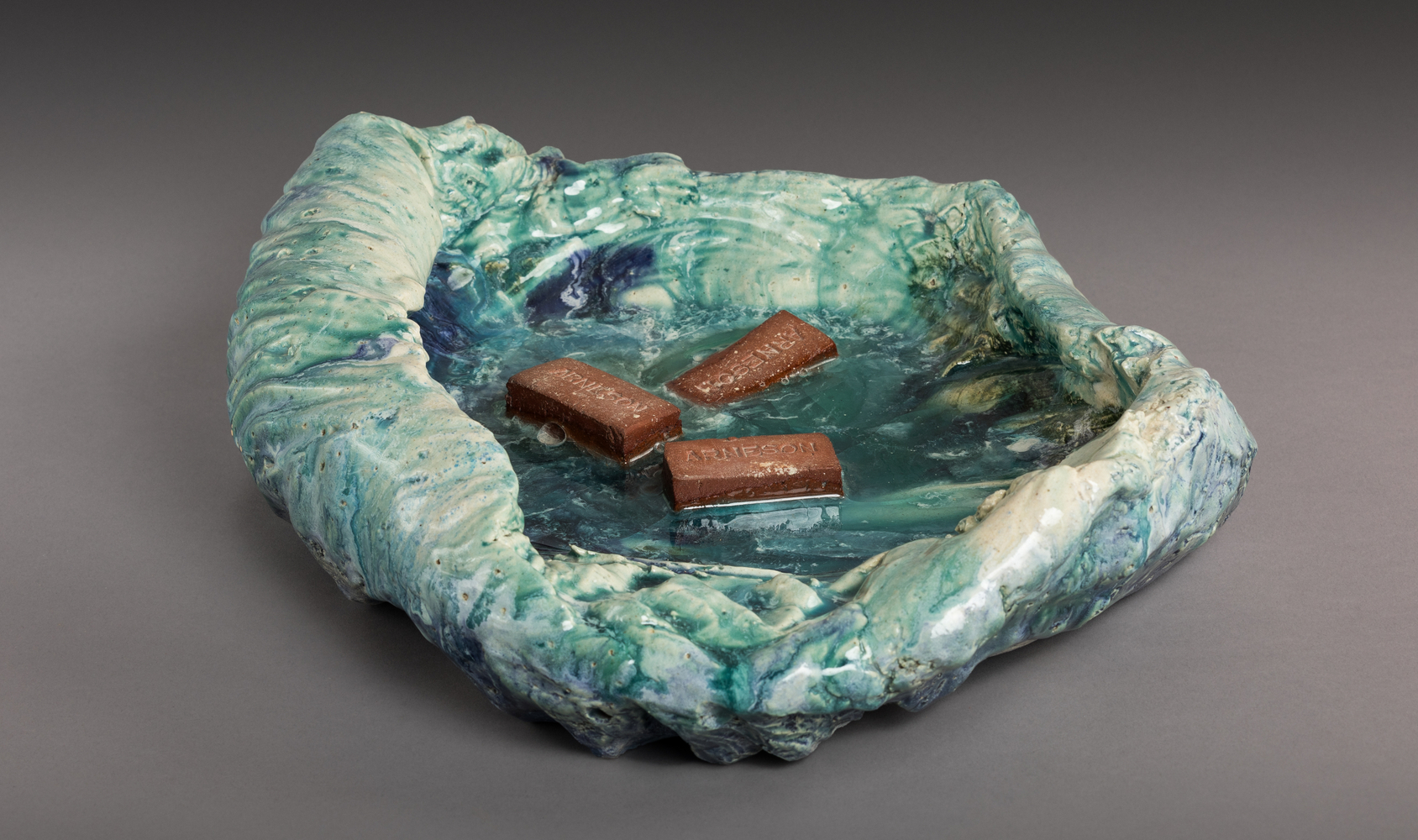
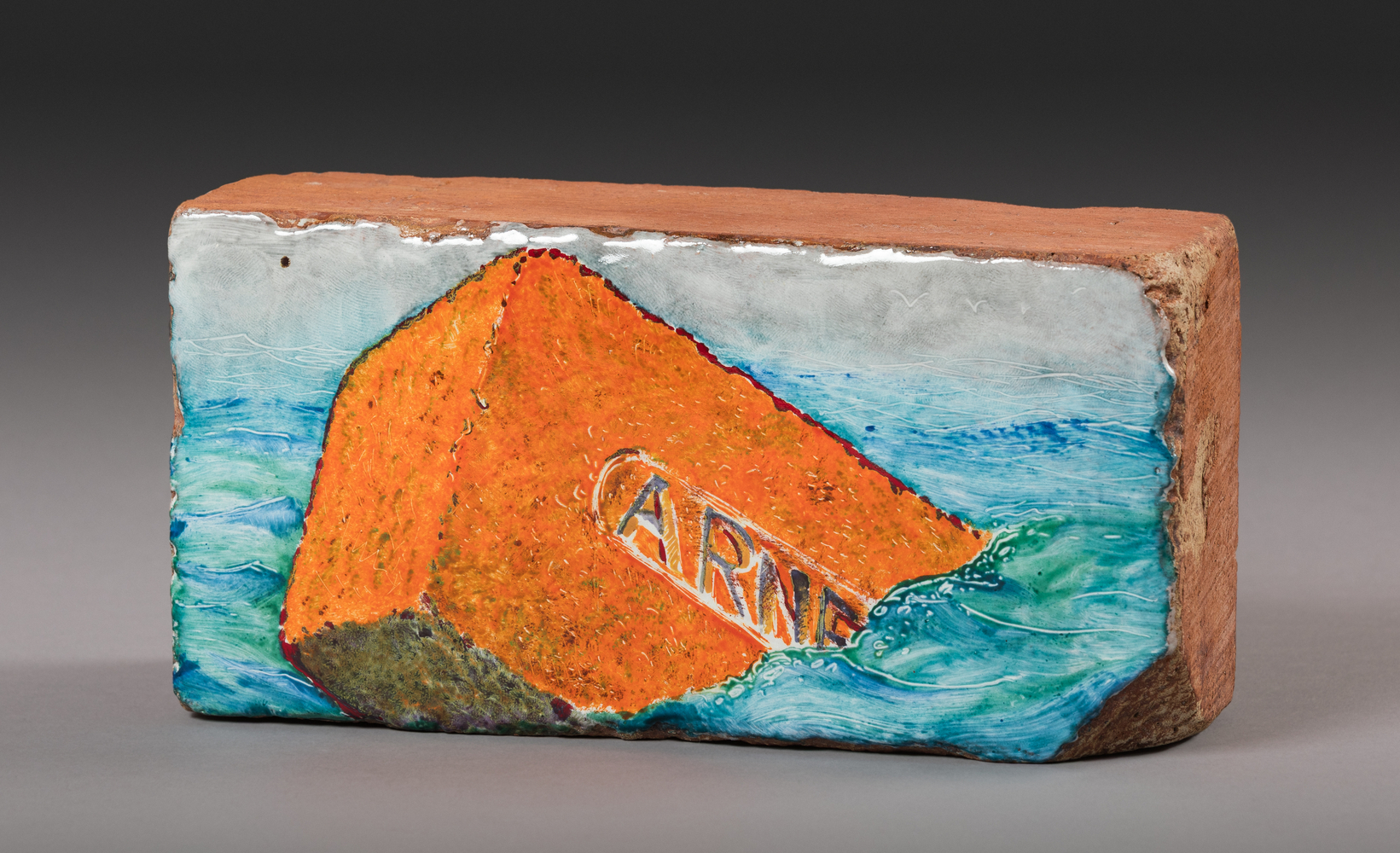
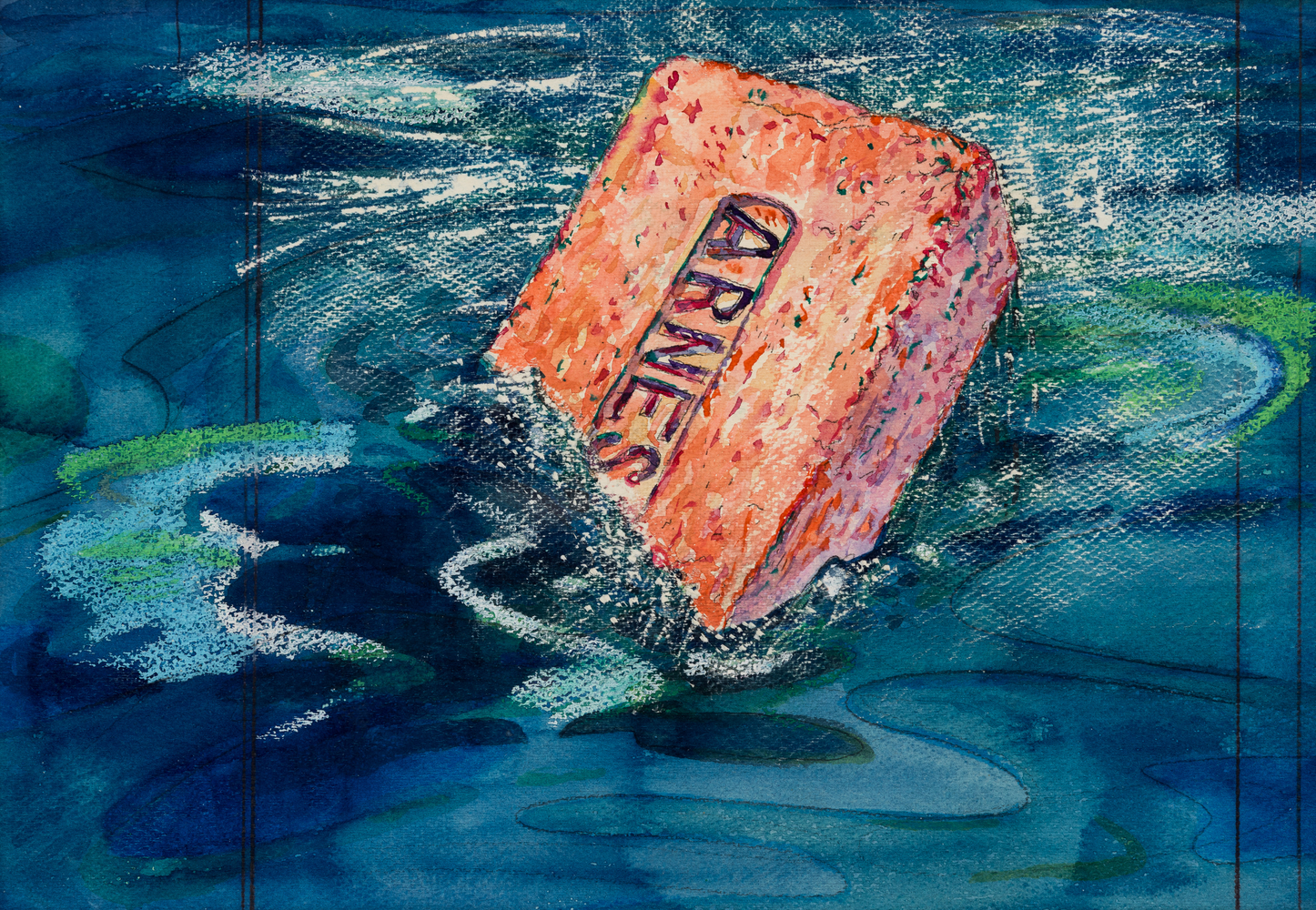
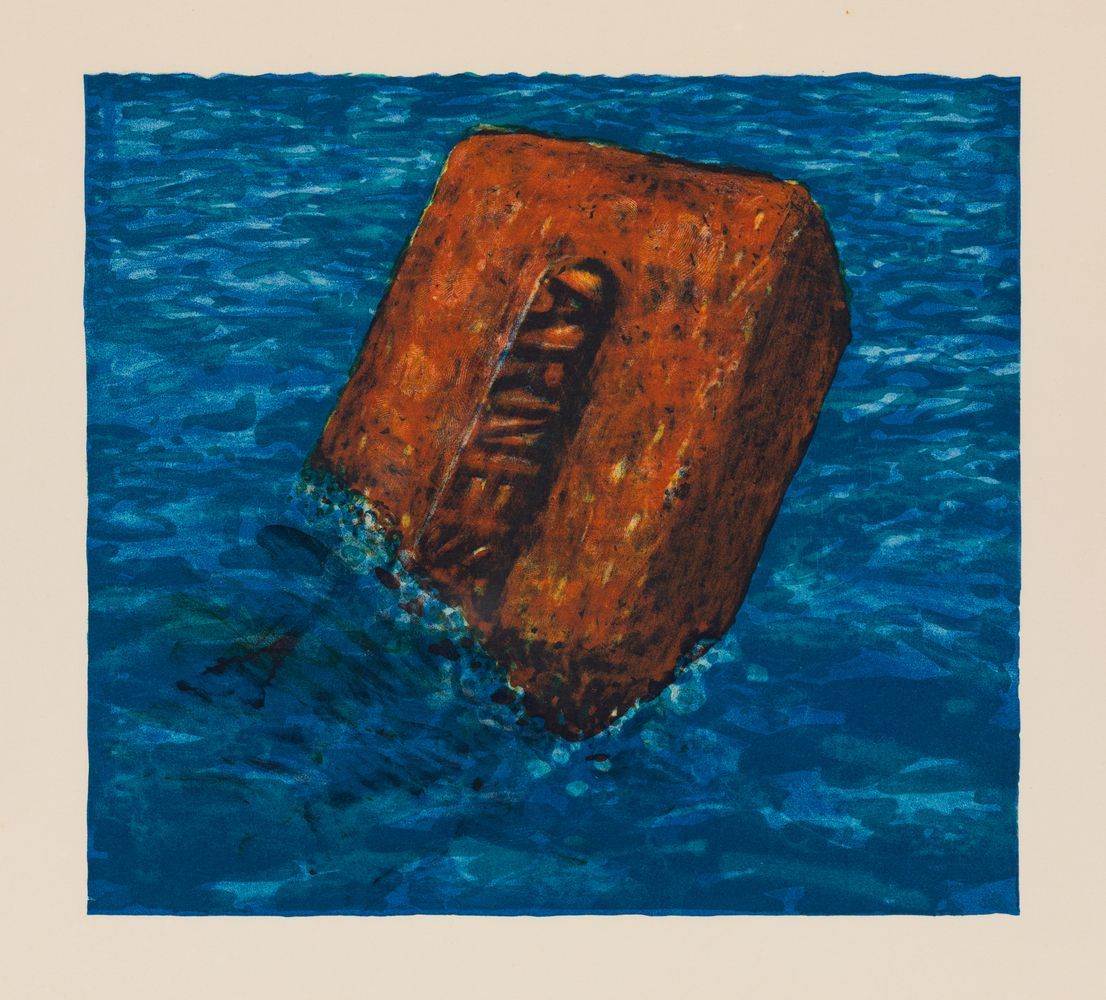
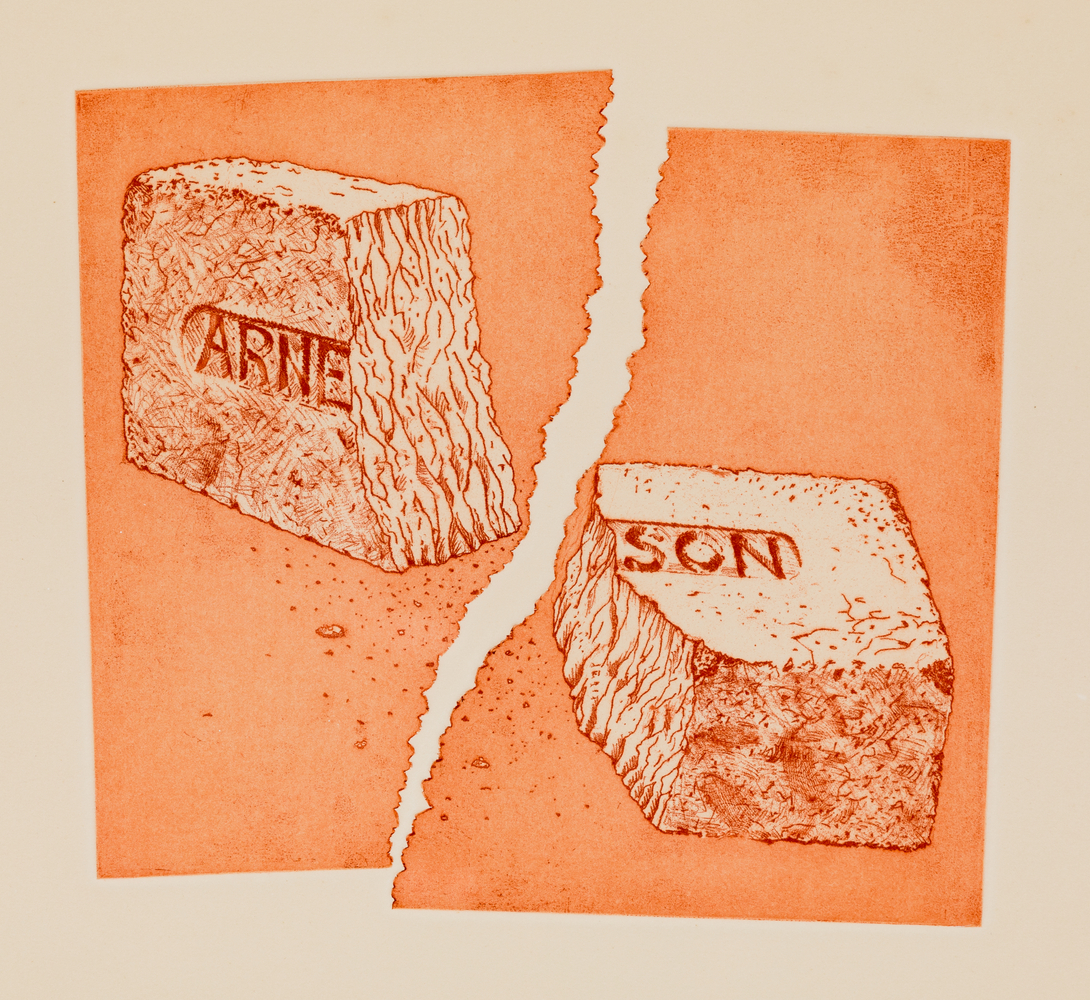
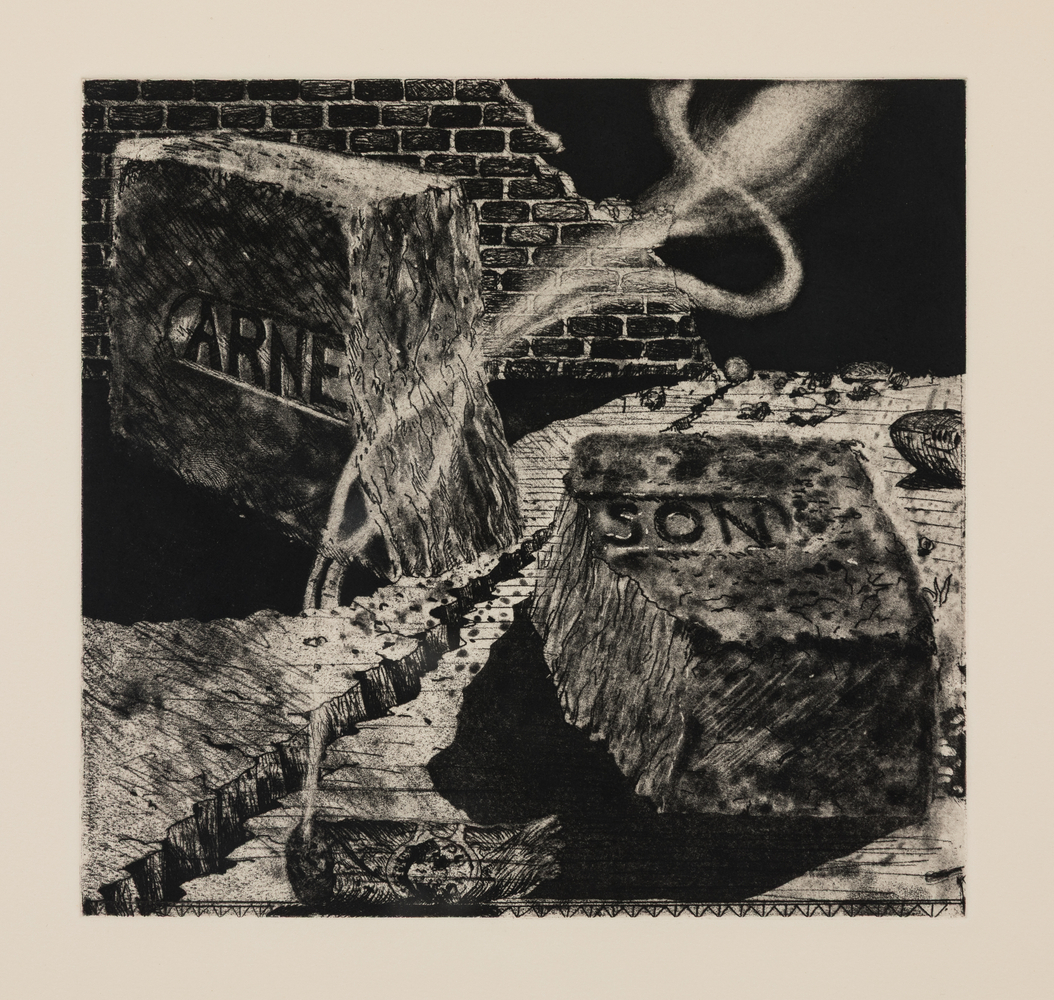
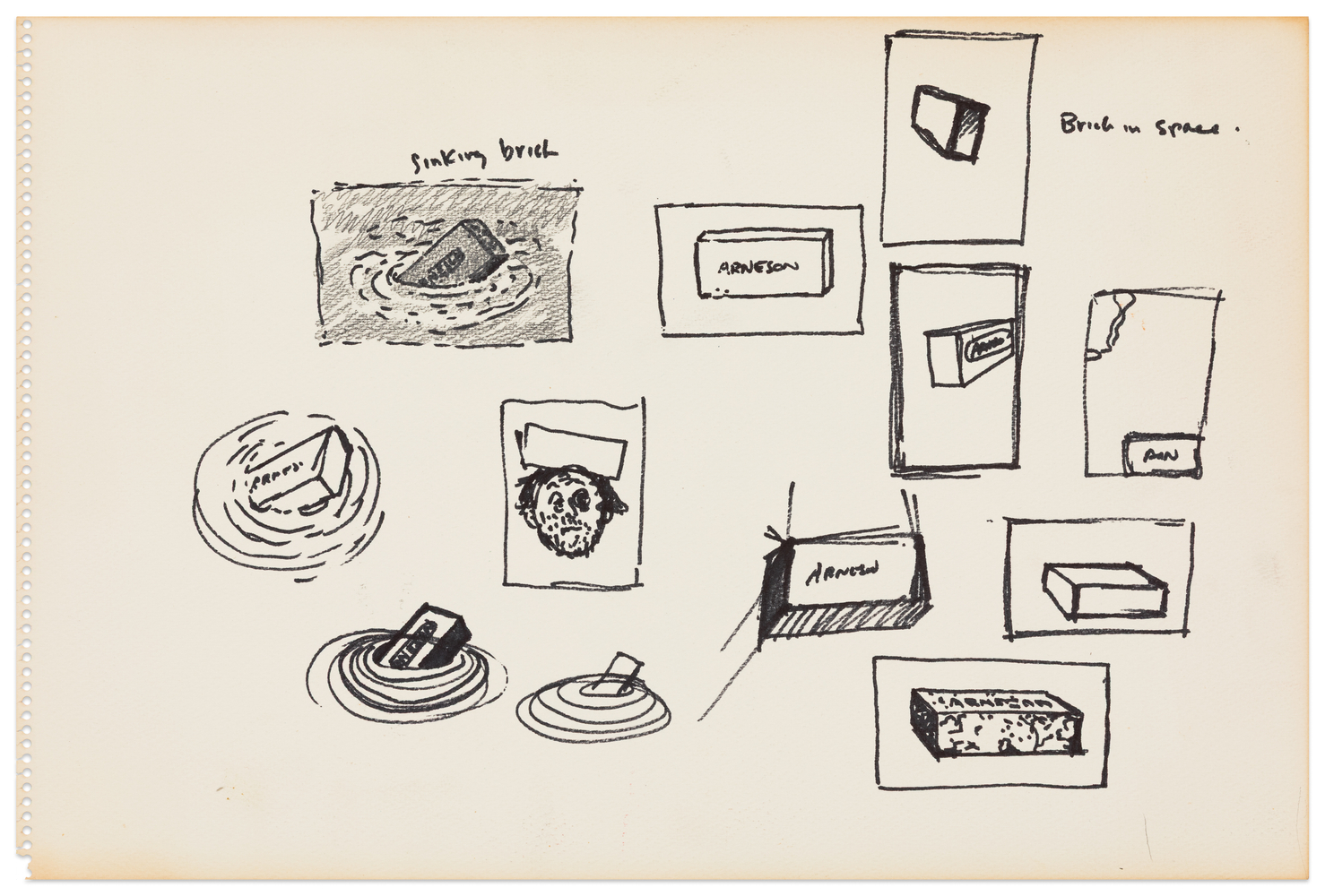
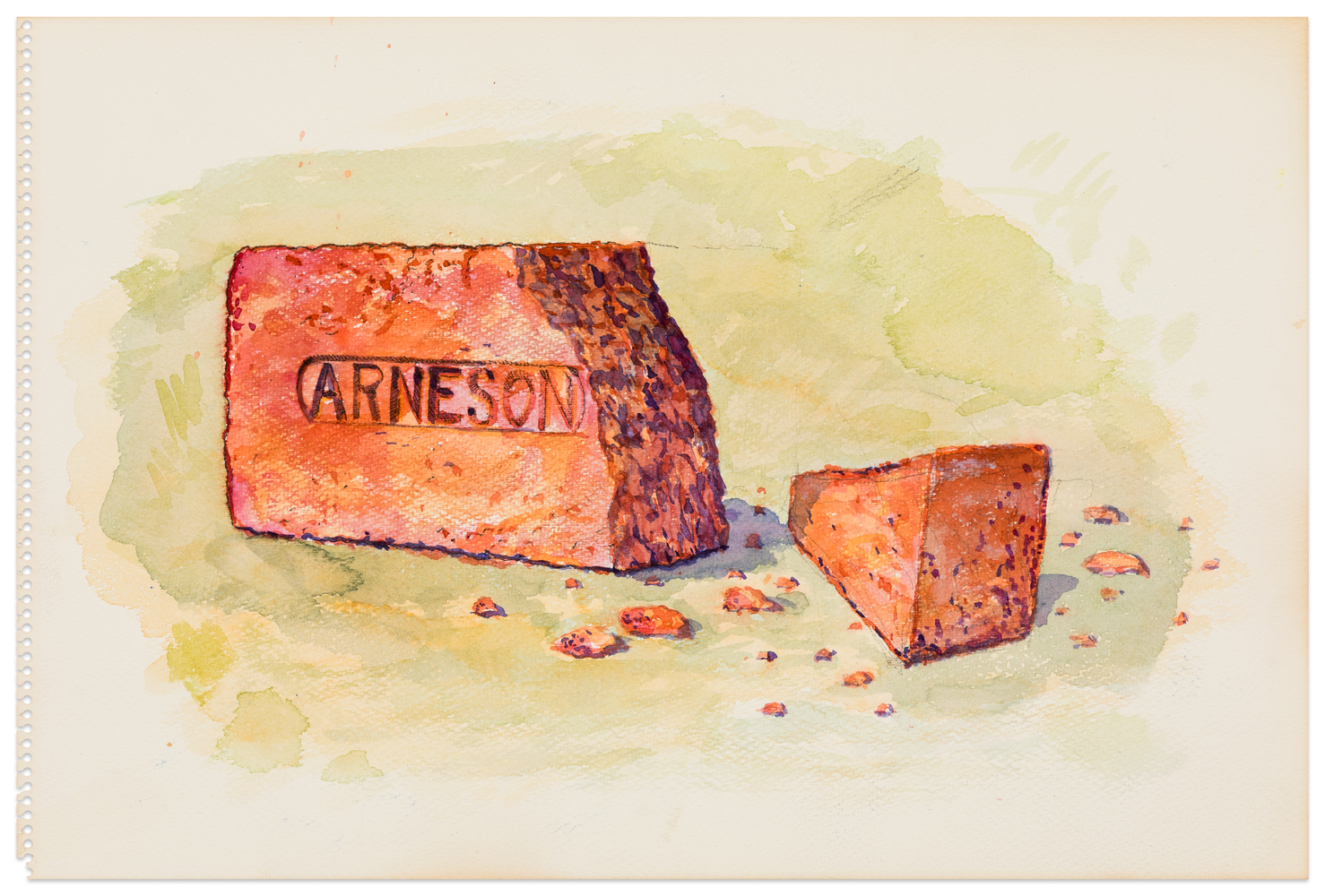
In the early 1970s, Arneson began a series of sculptures related to his love of swimming in the waters of the Carquinez Strait along the Benicia shoreline. Represented in the exhibition is a selection of watercolors, prints, ceramic bricks, and a related maquette from a suite of works called Sinking Bricks that is a part of the larger series of swimming works. Concurrent with this series, Arneson created the large-scale installation Fragment of Western Civilization (1972, now in the National Gallery of Australia), which the exhibition includes the maquette of. Incorporating a brick self-portrait, the sculpture takes aim at both the artist’s ego, the terracotta brick, and inverts the idea of the monument by presenting it as a pile of ruins.
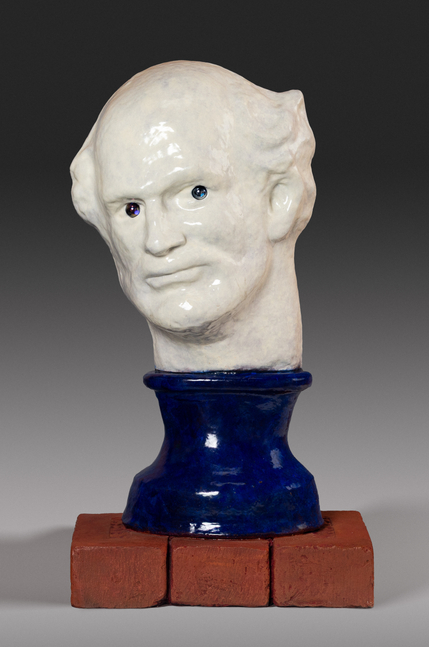
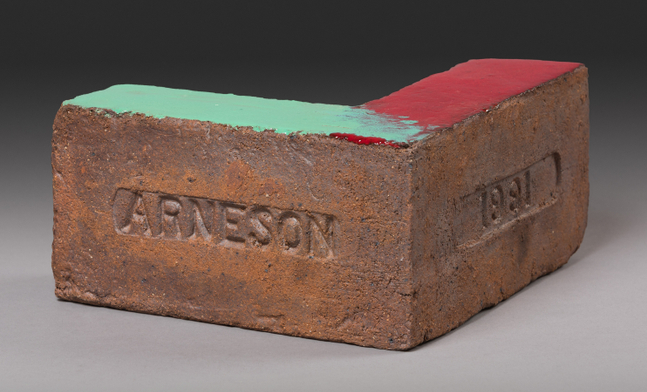
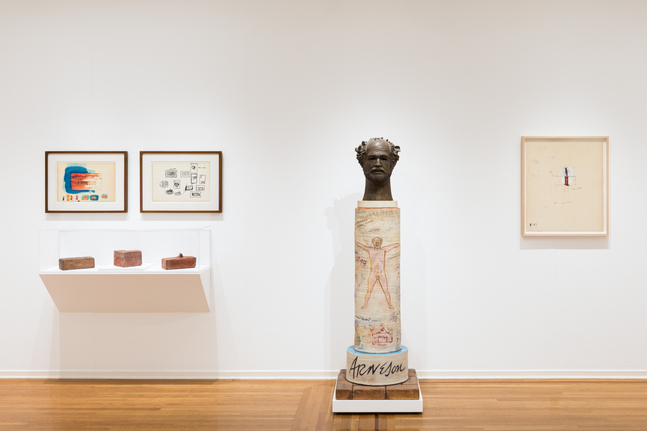
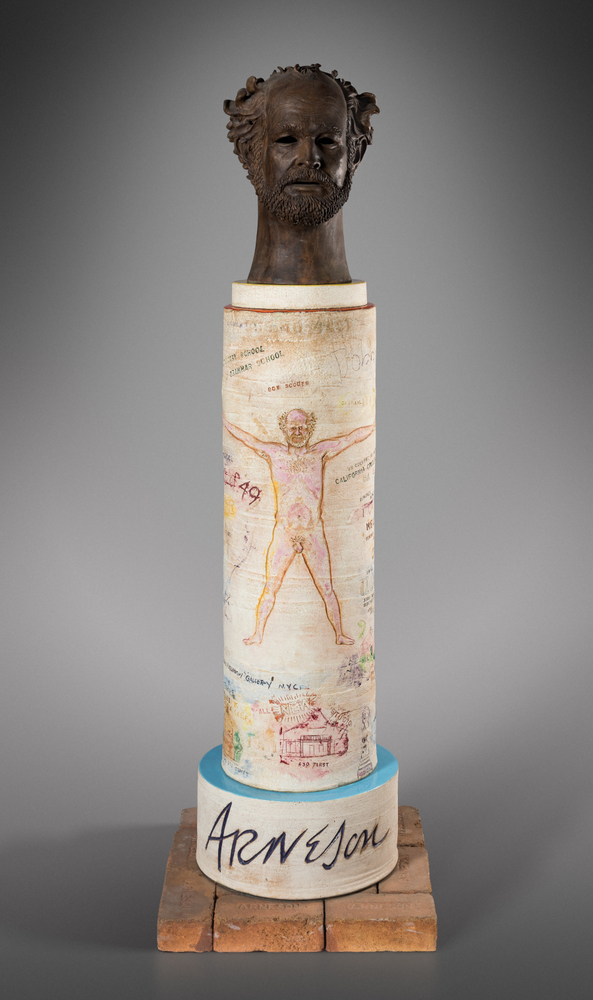
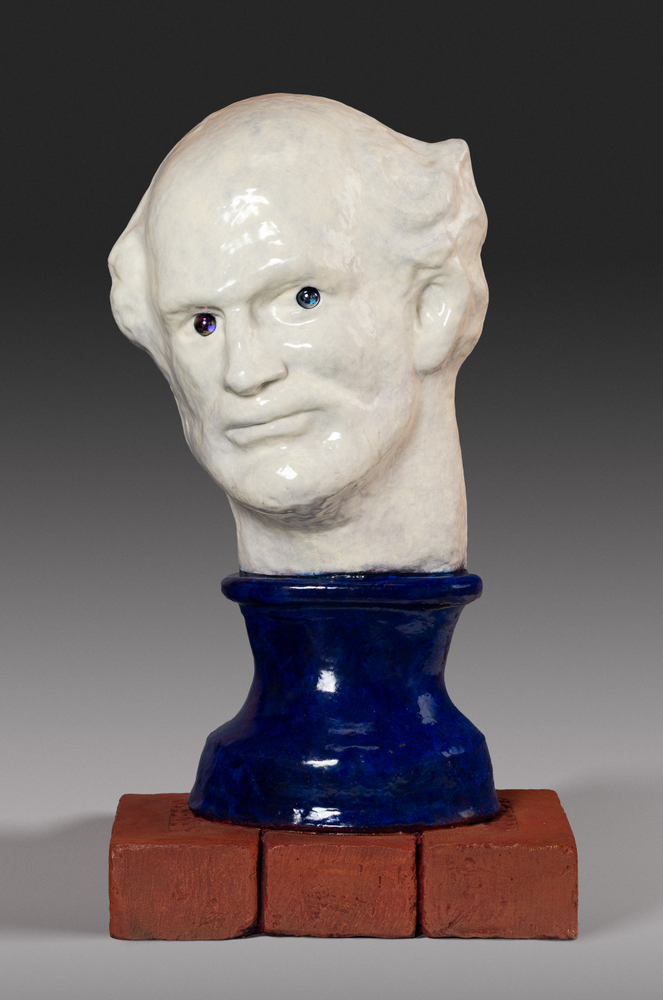
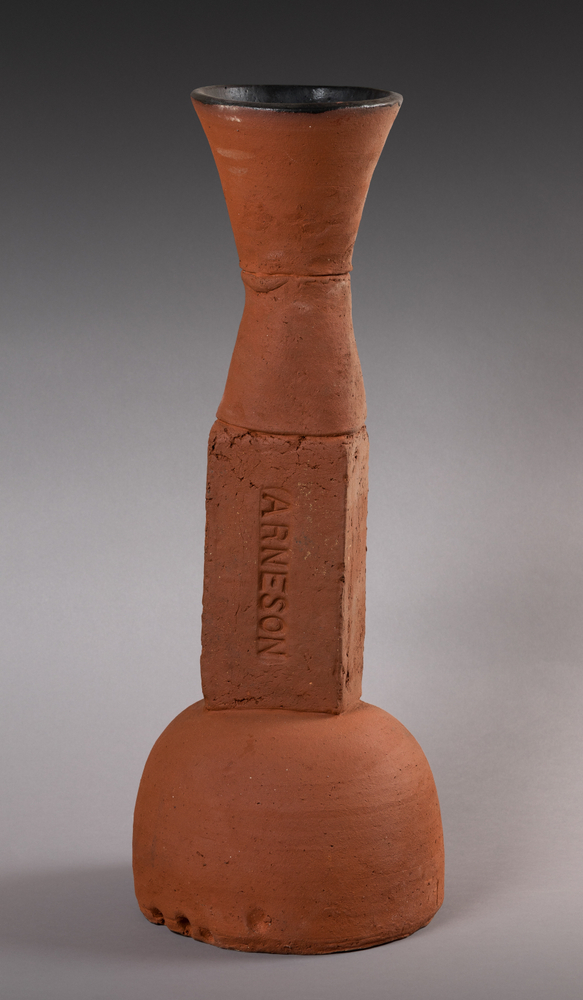
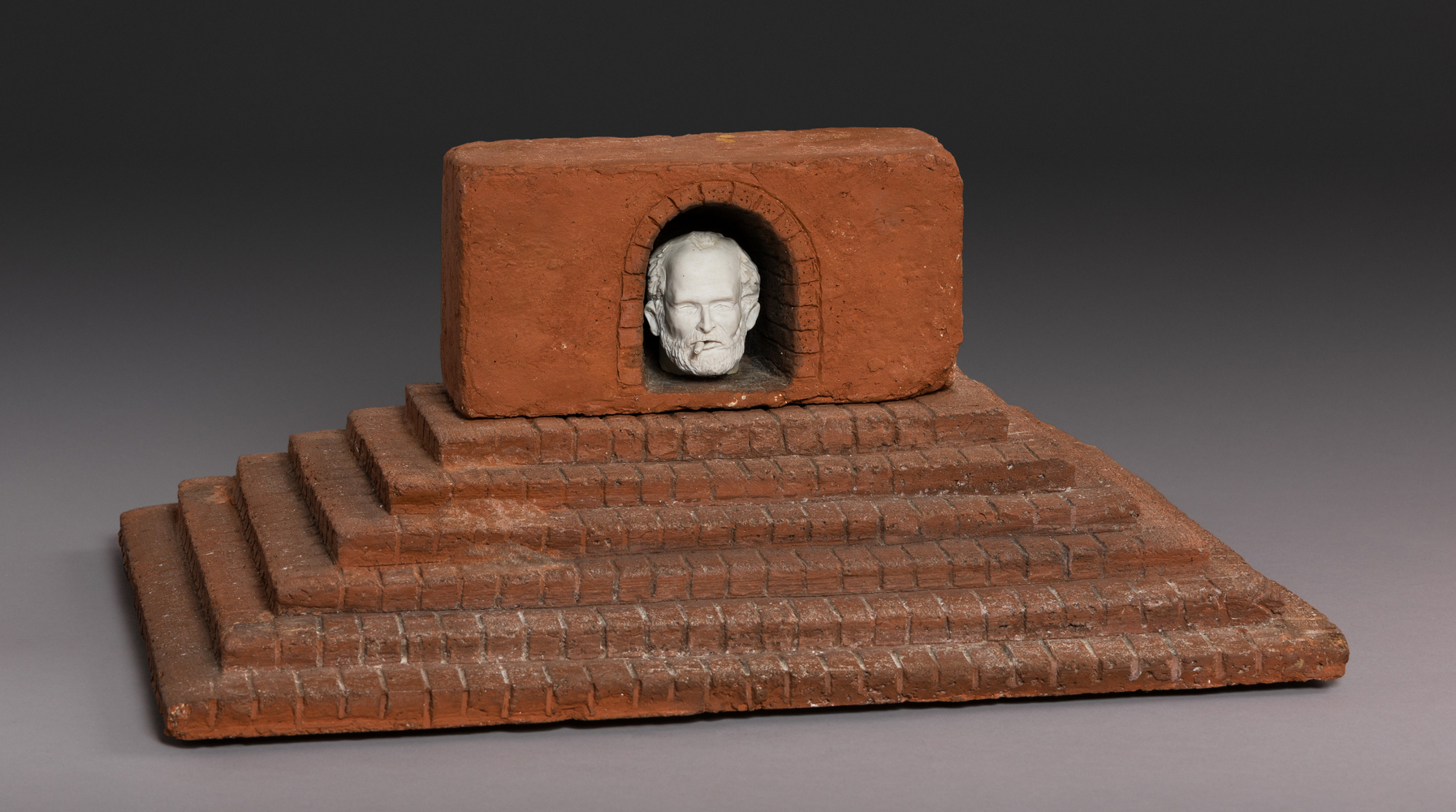
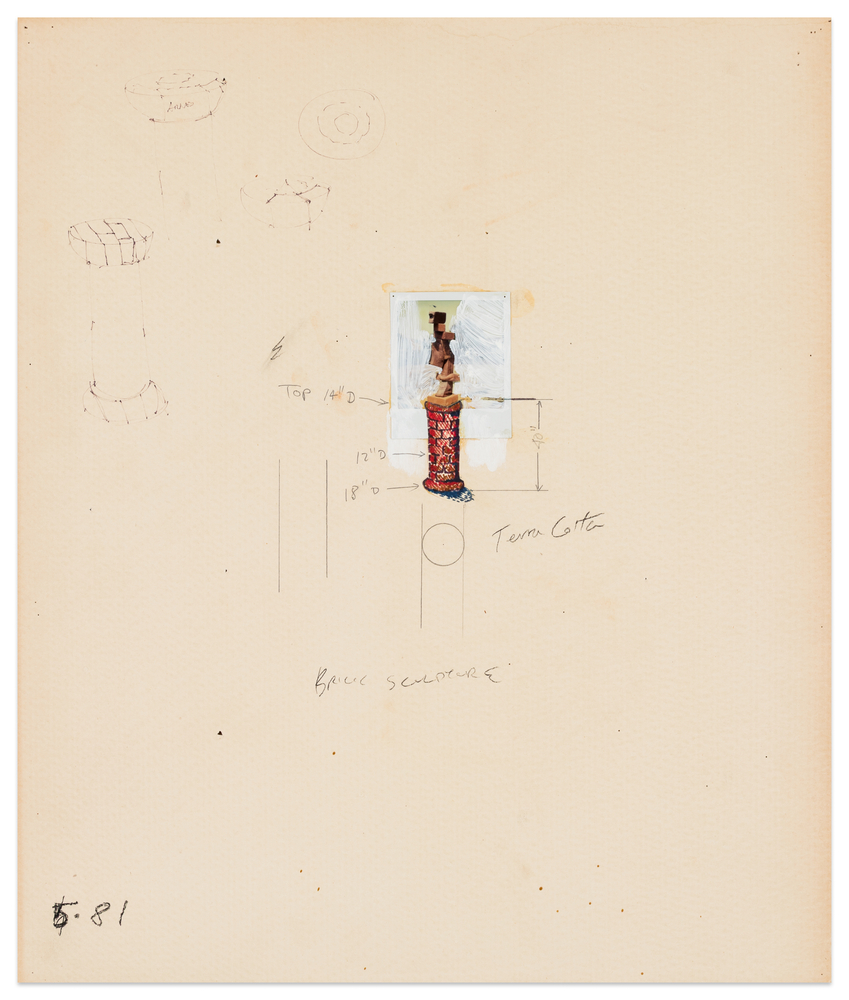
The final theme the exhibition explores is Arneson’s reflections on his life and mortality. As early as 1972, Arneson created a maquette for the unrealized Monument for Bob. Composed of a large brick at the top of a raised platform, an opening into the brick’s interior reveals a self-portrait head glazed in all white. All white self-portraits became a signature motif for Arneson investigating his own mortality, as can be seen in the late bronze work Blue Eyes (1991). The most direct work about Arneson’s life in the exhibition is Bio Bob (1982). Comprised of a bronze self-portrait resting atop a ceramic pedestal that is itself standing on a field of bricks, Arneson made this work as the ultimate self portrait of himself. Embellished into the surface of the ceramic column are many of the important milestones of his life and career – the births of his children, his early notoriety for his toilets, and the rejection of the George Moscone commission among them. One of the last brick pieces Arneson created was Corner Stone (1991), which can be viewed both as the companion to the 1966 corner brick, and as final symbolic brick capstone to his life as he neared its end.
Combining wit, humor, irreverence, biography, and conceptual principles, Robert Arneson explored the possibilities of the “brick” through a variety of artistic investigations, and in doing so imparted meaning to and elevated this humble object into a bedrock element of his career.
Born in Benicia, CA, in 1930, Robert Arneson earned his BA from the California College of Arts and Crafts in 1954 and his MFA from Mills College in Oakland in 1958. In 1962, Arneson was hired to teach ceramics at the University of California, Davis, which he did for 29 years until retiring in 1991. He died in 1992.
Robert Arneson has been the subject of numerous solo exhibitions and multiple museum retrospectives, including Robert Arneson, held at the Museum of Contemporary Art, Chicago in 1974; Robert Arneson: A Retrospective, organized by the Des Moines Art Center in 1986, which traveled to the Hirshhorn Museum and Sculpture Garden, Washington, D.C., the Portland Art Museum, Oregon, and the Oakland Museum of California; Robert Arneson: Self-Reflections in 1997 at the San Francisco Museum of Modern Art; and Arneson and the Object at the Palmer Museum of Art in 2004, which travelled to the Greenville County Museum of Art. His work was also included in the landmark FUNK exhibition at the Berkeley Art Museum in 1967; the 1979 West Coast Ceramics exhibition at the Stedelijk Museum, Amsterdam; Ceramic Sculpture: Six Artists at the Whitney Museum of American Art in 1981; What Nerve! Alternative Figures in American Art at the RISD Museum in 2014, and Sixties Surreal at the Whitney Museum of American Art in 2025-2026, curated by Dan Nadel.
Robert Arneson’s work can be found in major museums around the world, including The Museum of Modern Art; The Metropolitan Museum of Art; Whitney Museum of American Art; Solomon R. Guggenheim Museum; San Francisco Museum of Modern Art; National Gallery of Art, Washington, D.C.; Smithsonian American Art Museum; Hirshhorn Museum and Sculpture Garden; Los Angeles County Museum of Art; Museum of Contemporary Art, Los Angeles; Hammer Museum; Museum of Fine Arts, Boston; Fine Arts Museums of San Francisco; Yale University Art Gallery; Walker Art Center; Art Institute of Chicago; Shigaraki Ceramic Cultural Park, Koka, Japan; National Museum of Art, Kyoto, Japan; Shiga Museum of Art, Shiga, Japan; Stedelijk Museum, Amsterdam; National Gallery of Australia; Philadelphia Museum of Art; Denver Art Museum; Nelson-Atkins Museum of Art; Oakland Museum of California; Berkeley Art Museum and Pacific Film Archive; Crocker Art Museum, Sacramento; San Jose Museum of Art; Iris & B. Gerald Cantor Center for Visual Arts at Stanford University; Anderson Collection at Stanford University; Jan Shrem and Maria Manetti Shrem Museum of Art, U.C. Davis; and the di Rosa Center for Contemporary Art, Napa, among many others.
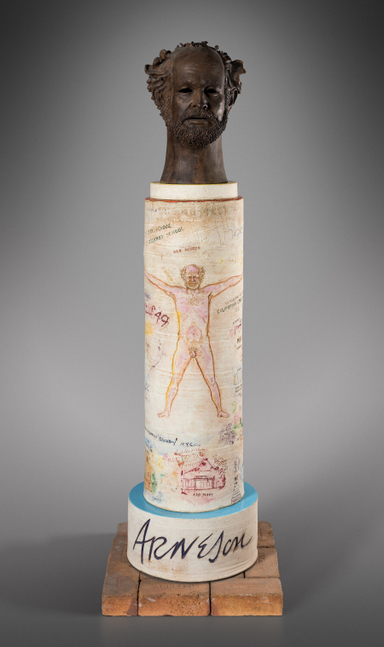
Robert Arneson
Bio Bob, 1982
bronze, A.P. 1 with unique ceramic pedestal
70 3/4 x 22 1/2 x 22 1/2 in.
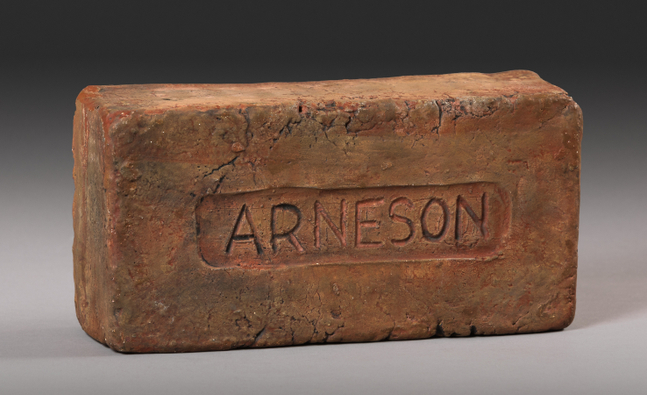
Robert Arneson
Brick, 1966
ceramic
4 5/8 x 9 1/4 x 3 1/8 in.
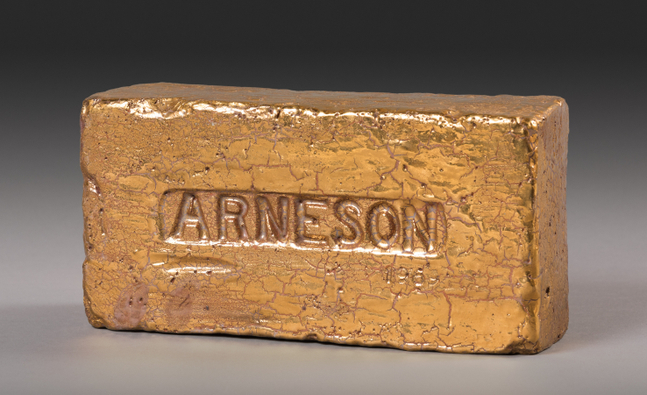
Robert Arneson
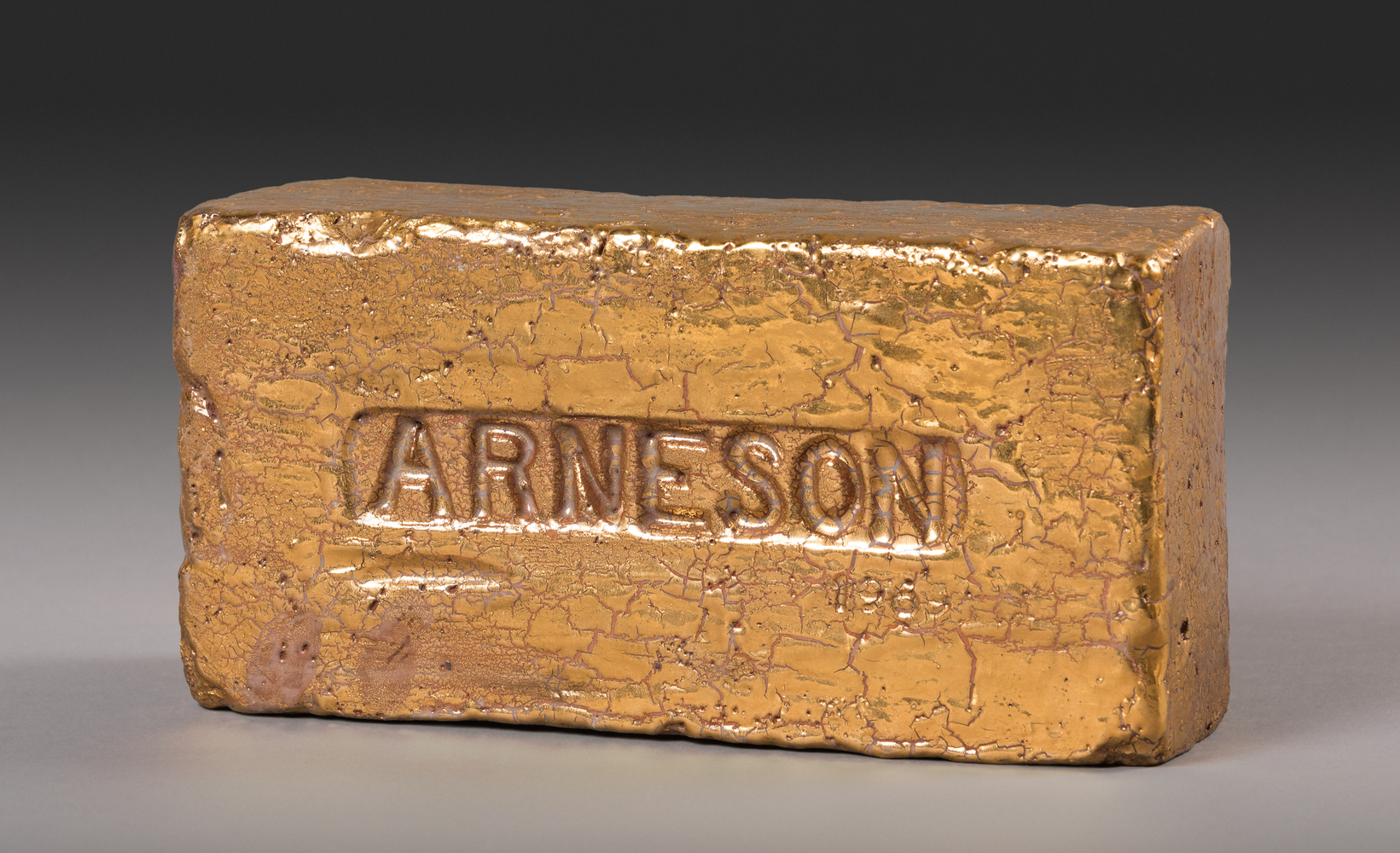
Gold Brick, 1969
glazed ceramic
4 1/4 x 8 5/8 x 2 3/4 in.
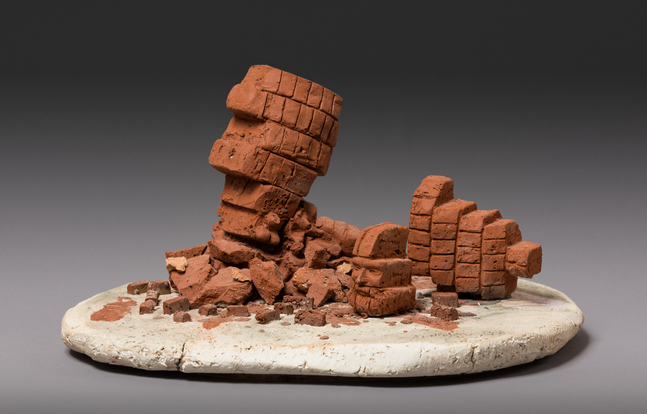
Robert Arneson
Model for 'Fragment of Western Civilization,' 1972
ceramic
8 x 15 x 11 in.
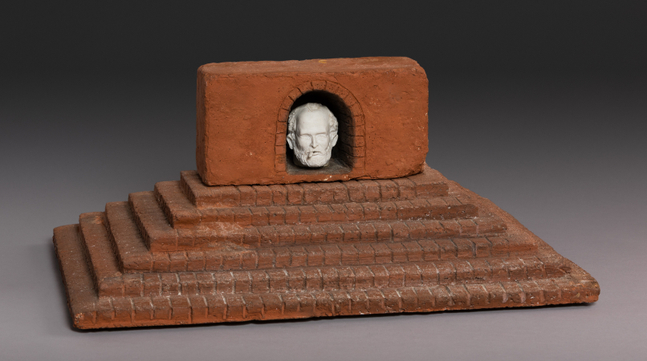
Robert Arneson
Memorial for Bob, 1972
terra cotta and ceramic
8 x 19 x 14 in.
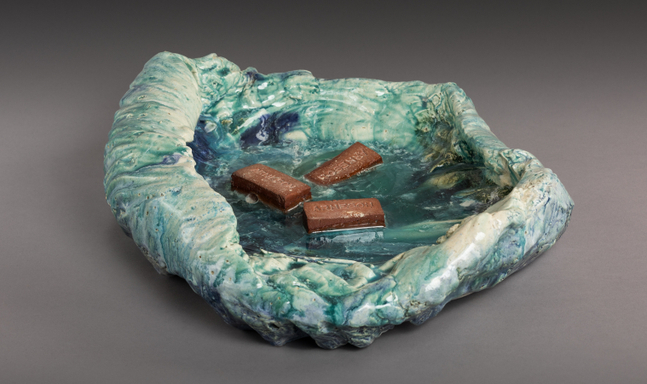
Robert Arneson
Floating Bricks, 1974
glazed ceramic
4 x 15 1/2 x 13 1/2 in.
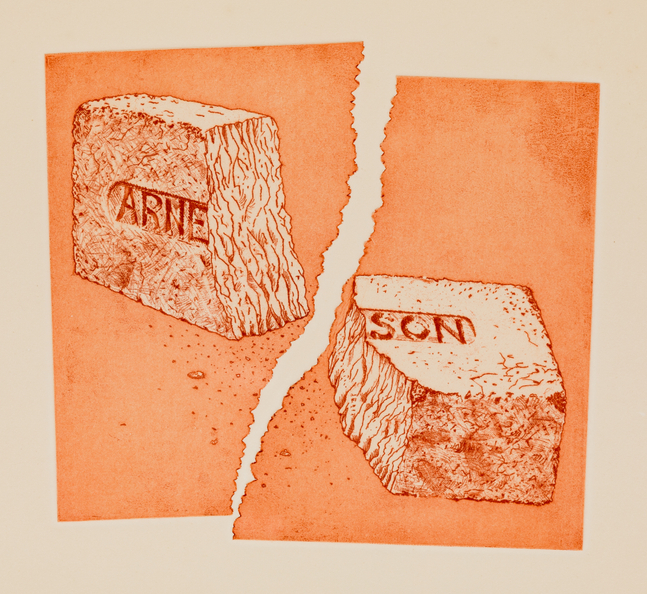
Robert Arneson
Broken Brick, 1975
etching on paper, A.P. 1
16 x 16 1/2 in.
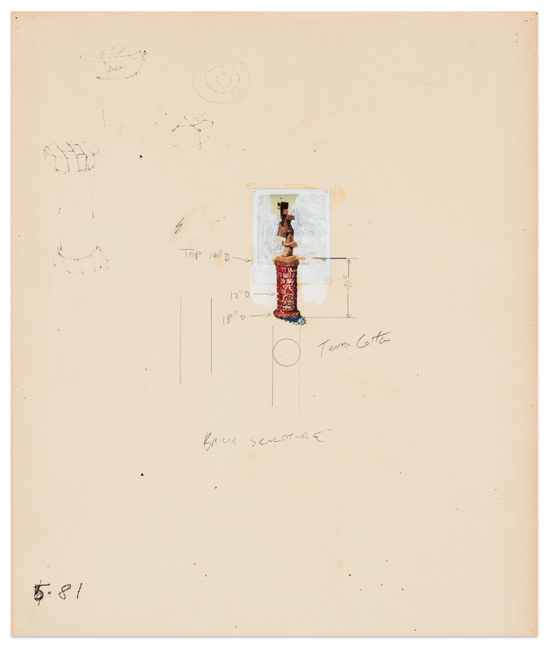
Robert Arneson
Study for Brick Sculpture, 1981
mixed media and collage on paper
28 x 23 3/4 in.


